


Transportation Contact Centre Software
Speed for
for moving what matters.
From dispatch to doorstep, TabaTalk gives transportation & logistics teams the tools to reduce delays, keep clients informed and manage operations at scale.










The features behind
Features that scale.
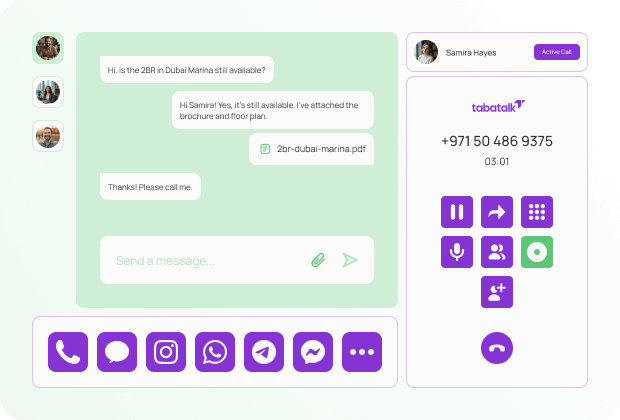
All channels, one command centre.
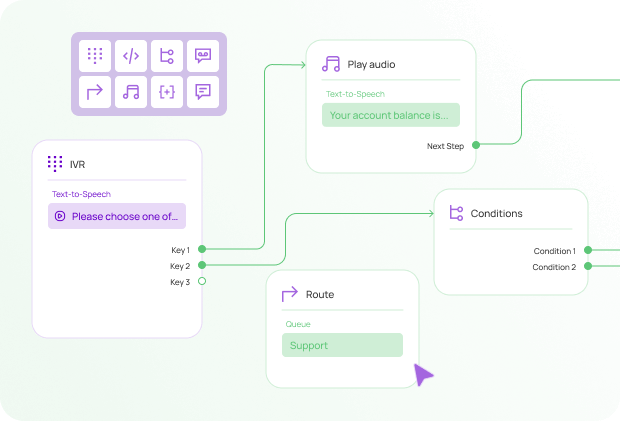
Overcome complexity with automations.
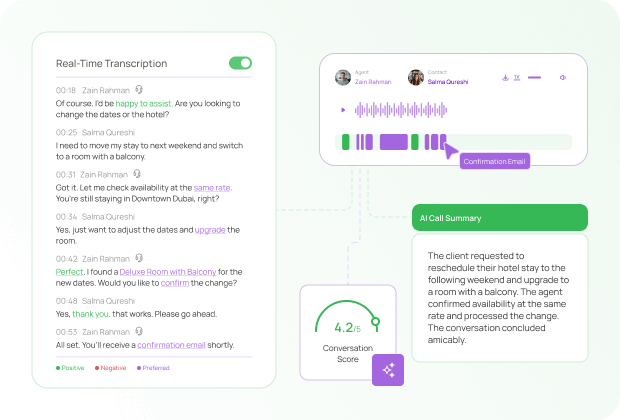
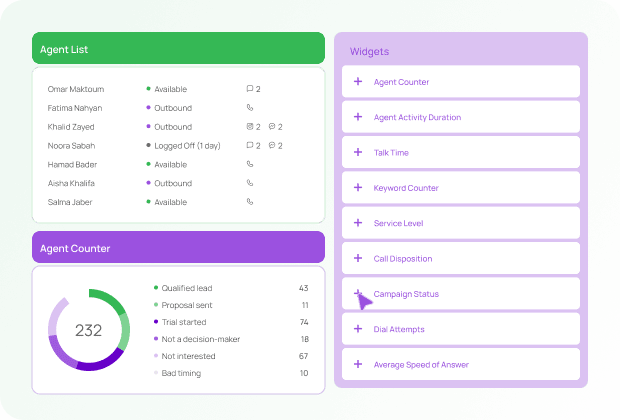
Spot problems before they pile up.
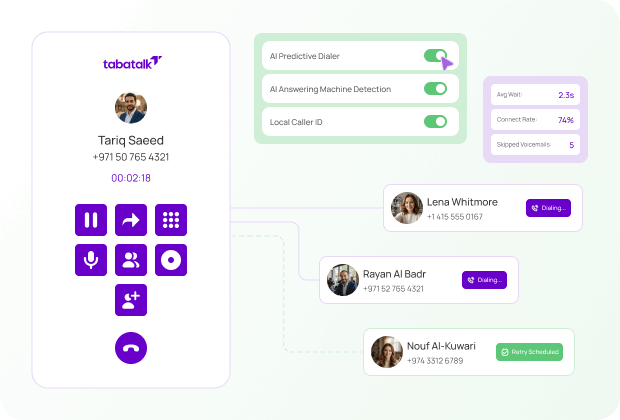
Proactive outreach, fewer disruptions.
Stay ahead of backlogs.
Stay in sync,
without the stress.
Stronger outcomes.





 Available
Not Available
Limited
Available
Not Available
Limited
Connectivity you
can count on.

global reach
Access virtual numbers in 120+ countries instantly so your team shows up with a local presence, wherever they call from.

ready to connect
With global data centers, real-time monitoring, and 100+ carrier connections, TabaTalk delivers crystal-clear VoIP at scale.

by design
From encryption to role-based access controls, every layer of TabaTalk is built to keep your data — and your customers’ — secure.
Ready
when you are.
wondering
Can TabaTalk help us communicate with both drivers and customers?
Absolutely. TabaTalk's transportation contact centre software consolidates all voice interactions, SMS exchanges, WhatsApp conversations, and live chat sessions into one unified workspace. Fleet coordinators manage dispatch updates, routing instructions, and driver communications while customer service representatives handle shipment tracking inquiries, delivery rescheduling requests, and complaint resolution, all without switching between different platforms. Every interaction appears chronologically within customer and driver profiles, ensuring complete context visibility. Representatives access conversation histories instantly, eliminating frustrating repetition when stakeholders contact your team multiple times. Context switches seamlessly between communication channels, so customers starting conversations via messaging can continue through phone calls without re-explaining their situations. This centralized approach ensures consistent experience quality regardless of which team member responds or which channel stakeholders prefer.
Does it integrate with our ERP or TMS?
Yes. TabaTalk provides native integration with leading ERP platforms, including SAP, Oracle, and Microsoft Dynamics, plus transport management software like Descartes, Trimble, and PCS through comprehensive APIs. Order details, shipment status updates, inventory availability, and client account information synchronize bidirectionally, ensuring data accuracy across your technology ecosystem. When customers contact support, representatives immediately see complete shipping records, package locations, delivery schedules, carrier assignments, and payment statuses, without navigating separate applications. Conversation notes, call recordings, and interaction summaries flow automatically into connected platforms, creating comprehensive documentation of customer communications. These connections eliminate duplicate data entry while maintaining information consistency. API documentation and technical assistance accelerate deployment timelines, typically completing setup within hours rather than the weeks traditional implementations require.
How does it help reduce delivery delays?
Automated workflows send proactive notifications alerting customers about shipment milestones, package pickup confirmations, transit checkpoint updates, and estimated delivery windows, before they contact support inquiring about order status. Driver reminder sequences ensure fleet members acknowledge assignments, confirm route details, and report potential obstacles affecting schedules. Real-time dashboards provide dispatchers instant visibility into fleet positions, traffic conditions causing slowdowns, and customer delivery windows at risk. Early warning alerts flag potential bottlenecks, weather disruptions, vehicle maintenance issues, or capacity constraints, enabling proactive interventions. When minor problems emerge, supervisors reassign routes, adjust schedules, or notify customers immediately before small issues escalate into missed deadlines and angry complaints. Conversation analytics identify recurring delay patterns, helping operations teams address systemic problems preventing future disruptions.
Is it built for multi-region logistics operations?
Definitely. TabaTalk supports local number provisioning in over 120 countries, enabling regional operations to display familiar caller IDs, improving answer rates when contacting customers in different markets. Centralized dashboards give supervisors comprehensive oversight across all geographic locations, monitoring service levels in European distribution centers, Asian manufacturing hubs, and North American fulfillment facilities simultaneously. Cloud architecture enables representative teams to support customers globally regardless of physical location. Language routing connects callers with fluent staff automatically based on customer preferences or location data. Compliance features adapt to regional regulations governing customer communications, data storage requirements, and privacy mandates. Unified reporting consolidates performance metrics across territories, identifying best practices in high-performing regions for replication elsewhere. This global-local balance supports international expansion while maintaining operational consistency.
How quickly can we get started?
Most logistics teams achieve full operational status within 24 hours through TabaTalk's streamlined deployment process. Implementation includes phone number provisioning, intelligent routing configuration based on inquiry types, core platform integration with your ERP or TMS, and representative training through intuitive interfaces requiring minimal instruction. Pre-configured workflows address common scenarios, shipment tracking inquiries, delivery rescheduling requests, driver dispatch communications, and billing questions, enabling immediate productivity. The solution mirrors familiar communication patterns, reducing learning curves significantly. Supervisors adjust call flows, update knowledge bases, and modify distribution rules through no-code administrative controls without requiring developer assistance or extended configuration timelines. Unlike complex legacy systems demanding weeks of customization, TabaTalk's cloud architecture activates essential functionality immediately while advanced capabilities roll out progressively based on operational priorities.
What is transportation contact center software?
Transportation contact center software is specialized technology enabling logistics providers, fleet operators, courier services, bus companies, and freight forwarders to manage customer communications across voice, chat, SMS, and messaging platforms. Unlike generic solutions, these platforms integrate directly with transport management systems, fleet tracking applications, and scheduling software. Representatives assist customers with shipment tracking inquiries, delivery rescheduling requests, and complaint resolution while coordinating with drivers regarding route assignments, pickup confirmations, and delivery exceptions. Advanced features include intelligent routing connecting callers to appropriate departments, automated status notifications reducing inquiry volumes, real-time dashboards monitoring fleet positions, and comprehensive analytics tracking service quality metrics. These purpose-built operator solutions address unique challenges facing mobility and logistics companies while delivering exceptional customer experiences.
How does customer service differ in the transportation industry?
Transportation customer service demands real-time responsiveness to rapidly changing situations, traffic delays, weather disruptions, vehicle breakdowns, or cargo damage, requiring immediate communication adjustments. Representatives must coordinate simultaneously between customers expecting deliveries, drivers navigating routes, and dispatchers managing fleet resources. Peak volumes fluctuate dramatically around seasonal shipping surges, holiday periods, and promotional events, necessitating flexible workforce scaling. Emotional intelligence proves critical when addressing anxious customers facing missed deliveries, affecting business operations or personal events. Communication must accommodate diverse stakeholders, commercial shippers negotiating contracts, individual consumers tracking parcels, and partner carriers coordinating handoffs. Success metrics emphasize on-time performance and first-contact resolution rather than just conversation duration. Voiso helps transportation teams manage high-volume voice interactions efficiently through automated workflows and intelligent distribution algorithms, balancing speed with personalized attention.
How can contact centre technology improve passenger communication?
Modern platforms enable transit operators to send automated service alerts notifying passengers about schedule changes, route diversions, or service disruptions before travelers arrive at stations. Mobile applications integrated with contact center software let riders submit real-time feedback, report safety concerns, or request assistance directly from their smartphones. Intelligent routing connects passenger inquiries, lost item reports, fare questions, and accessibility requests to specialized agents possessing relevant expertise. Chatbots provide instant answers to common questions about schedules, routes, and fares 24/7, eliminating frustration when human support isn't immediately available. Multilingual support ensures non-native speakers receive assistance in their referred languages. Real-time dashboards help supervisors monitor complaint volumes, identifying service quality issues requiring immediate attention. These capabilities transform transit communications from reactive problem-solving into proactive passenger experience management.
Is cloud contact centre software suitable for logistics and mobility companies?
Absolutely. Cloud architecture eliminates expensive on-premise infrastructure investments while enabling representatives to assist customers from anywhere, such as warehouse facilities, distribution centers, or remote home offices. Instant scalability accommodates seasonal volume fluctuations and unexpected surges without capacity planning delays or hardware procurement. Automatic updates ensure the latest security patches and feature enhancements deploy without service interruptions or manual IT intervention. Disaster recovery capabilities maintain business continuity during facility disruptions through geographically distributed redundancy. Flexible pricing models align costs with actual usage rather than fixed capacity commitments. Integration with modern desk software, CRM platforms, and fleet management applications happens seamlessly through APIs. Rapid deployment timelines activate teams within days, versus the months traditional implementations require. Remote workforce capabilities expand talent acquisition beyond local markets. These combined benefits transform operations from capital-intensive models into agile delivery frameworks.
Can transport operators manage high enquiry volumes efficiently?
Yes. Intelligent call distribution automatically routes incoming inquiries to available representatives based on skills, language preferences, or inquiry types, minimizing customer wait times during peak periods. Automated callback features prevent queue abandonment by offering customers return calls when representatives become available rather than forcing extended holds. Interactive voice response systems enable callers to obtain shipment tracking updates, delivery schedules, or account information through self-service options without agent assistance. Chatbots deflect routine questions, operating hours, service area coverage, and rate quotes, from human staff who focus on complex issues requiring personalized attention. Workforce management forecasts staffing requirements based on historical patterns, optimizing schedules across fluctuating demand. Real-time monitoring alerts supervisors when service levels deteriorate, enabling proactive interventions. These automation capabilities prevent both understaffing scenarios, frustrating customers, and overstaffing periods, wasting budget resources.
What features should transportation customer service platforms include?
Essential capabilities include omnichannel functionality unifying voice agents, chat representatives, email responders, and social media monitors within a single interface. Intelligent routing directs shipment tracking inquiries to operations specialists, billing questions to accounting staff, and delivery complaints to customer resolution teams automatically. Fleet integration displays real-time vehicle locations, driver assignments, and delivery schedules during conversations. Screen pop reveals complete customer profiles, shipping histories, payment statuses, communication preferences, and when interactions arrive. Knowledge base access provides instant policy information, rate schedules, and troubleshooting procedures. Call recording captures interactions for quality assurance, dispute resolution, and compliance documentation. Workforce optimization tools schedule staff efficiently across fluctuating volumes. Analytics dashboards track first-contact resolution percentages, average response times, and satisfaction scores. Automated workflows trigger follow-up tasks, ensuring consistent experiences regardless of which team member handles interactions.
Can faster response times reduce customer complaints?
Definitely. Research demonstrates that prompt acknowledgment, even without immediate resolution, significantly reduces customer frustration and complaint escalation. TabaTalk's instant callback capabilities connect customers with representatives within minutes of inquiry submission, capturing issues while details remain fresh and preventing anxiety-driven multiple contacts. Automated status notifications proactively inform customers about delivery progress, potential delays, or exception events before they contact support demanding updates. Real-time routing ensures urgent issues, damaged shipments, missed deliveries, or billing discrepancies receive immediate attention rather than waiting in general queues. SMS confirmation sequences acknowledge requests instantly, preventing uncertainty about whether messages reached appropriate personnel. Analytics identify response time patterns correlating with satisfaction scores, enabling targeted improvements. When customers experience quick, professional service that helps them resolve delivery issues efficiently, complaint volumes decrease substantially while loyalty and retention rates improve measurably.