


CALL FLOW BUILDER
Better journeys,
built your way.
With TabaTalk’s drag-and-drop builder, it’s easy to map conversations that respond to real needs in real time.










better conversations.
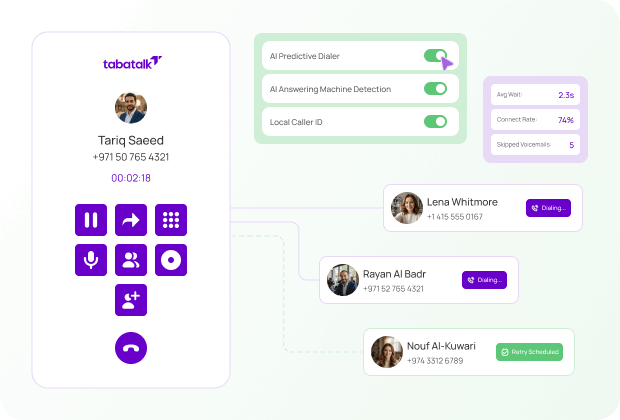
Stay in sync,
without the stress
More ways TabaTalk
helps you deliver.
Every channnel,
one workspace.
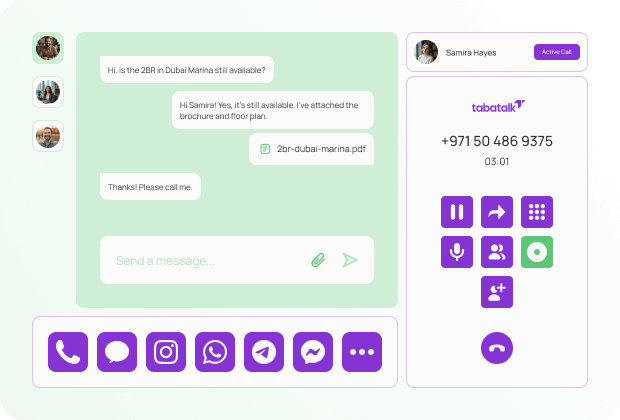
Connect faster. Stay focused.
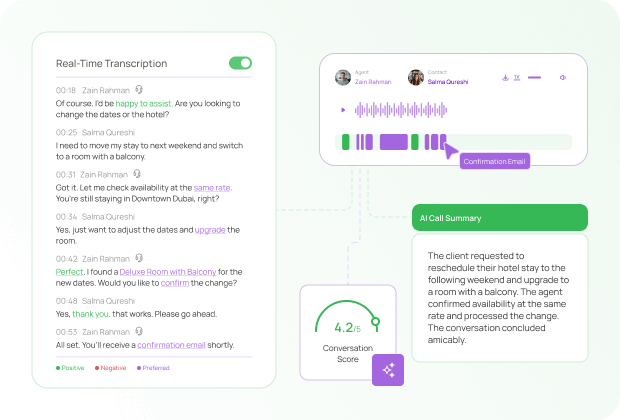
Understand what’s really said.
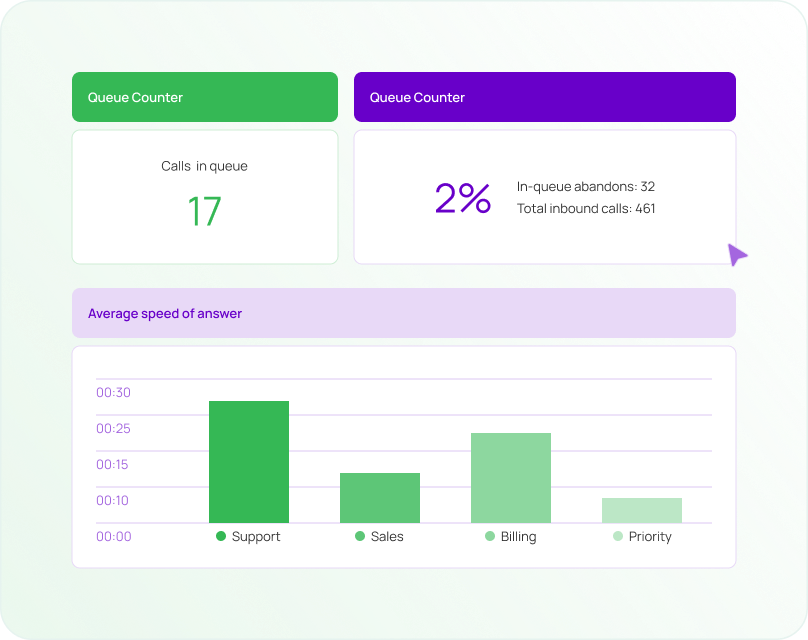
See what matters, when it matters.
Ready
when you are.
wondering
How hard is it to build flows in TabaTalk?
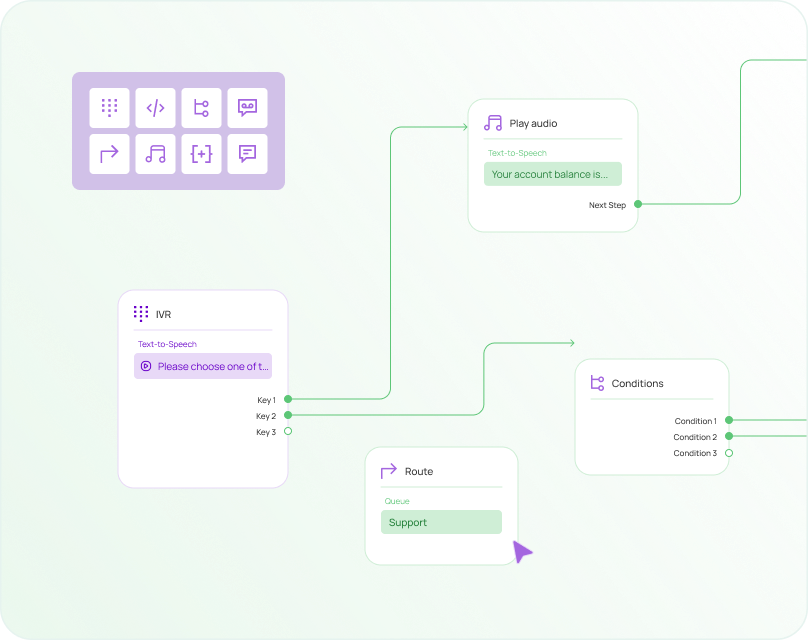
Creating workflows requires no technical expertise whatsoever. TabaTalk's Flow Builder operates entirely through drag-and-drop functionality, eliminating the need for coding knowledge or developer resources. Visual elements represent each step in your customer journey, making complex call routing logic easy to understand and modify. Teams can design sophisticated IVR menus, conditional branching, and automated responses within minutes rather than days. The interface presents options clearly, guiding users through configuration without overwhelming them with technical jargon. Most organizations create their first functional call flow during initial onboarding sessions. If you can map out how customers should navigate your phone system, translating that vision into working automation becomes straightforward and intuitive.
Can I build both voice and messaging flows?
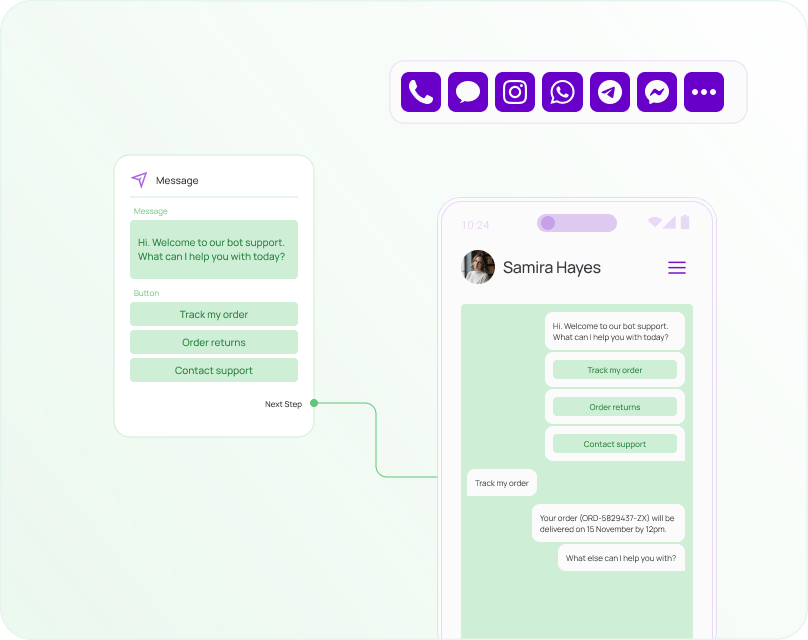
TabaTalk supports unified workflow creation across voice calls and messaging channels within a single workspace. Design phone-based IVR systems alongside WhatsApp, SMS, or web chat automation using identical building blocks and logic structures. Each channel provides full support for intelligent routing, customer self-service capabilities, and conditional automation based on user inputs or behavioral triggers. This multi-channel approach lets you maintain consistent customer experiences regardless of how people choose to contact your organization. Agents receive escalations from any channel through one interface, while customers enjoy seamless transitions between communication methods. The flow builder adapts automatically to channel-specific capabilities without requiring separate design efforts for each medium.
What kind of routing rules can I set?
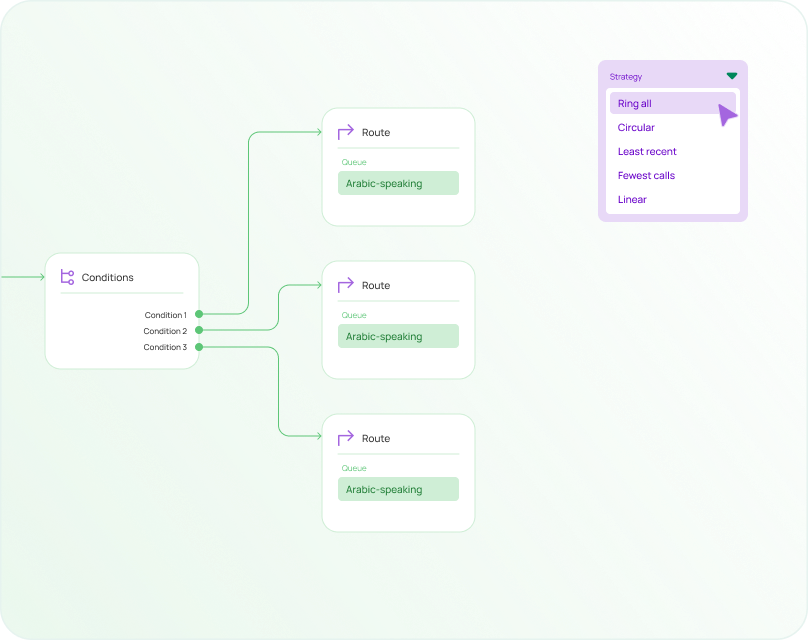
TabaTalk's call flow builder enables sophisticated call routing based on multiple criteria including IVR selections, current time or day-of-week, team member skills, caller's spoken language preference, and data pulled directly from your CRM platform. Configure rules through simple point-and-click interfaces rather than writing complex scripts or formulas. Combine multiple conditions to create precisely targeted routing logic, for example, directing Spanish-speaking callers to bilingual agents only during business hours, then routing to voicemail with translated messages outside those times. Priority-based queuing ensures VIP customers reach specialized support teams immediately. The system evaluates rules in real-time as each call arrives, dynamically adjusting paths based on current agent availability and workload distribution across departments.
Can I connect my CRM or helpdesk?
Native integrations with Salesforce, HubSpot, Zoho, Bitrix24, and other popular business platforms enable seamless data synchronization between your call flows and existing customer records. The flow builder pulls information directly from connected systems, allowing personalized greetings, account-specific routing, and automated responses based on purchase history, support tickets, or subscription status. Customers appreciate when phone menus recognize them automatically and provide relevant self-service options without requiring manual account number entry. Integration happens through pre-built connectors requiring minimal configuration, typically completing in under an hour. Data flows bidirectionally, calls can update CRM records automatically, logging interactions and capturing outcomes without agent intervention, ensuring your customer database remains current.
How does Flow Builder help with self-service?
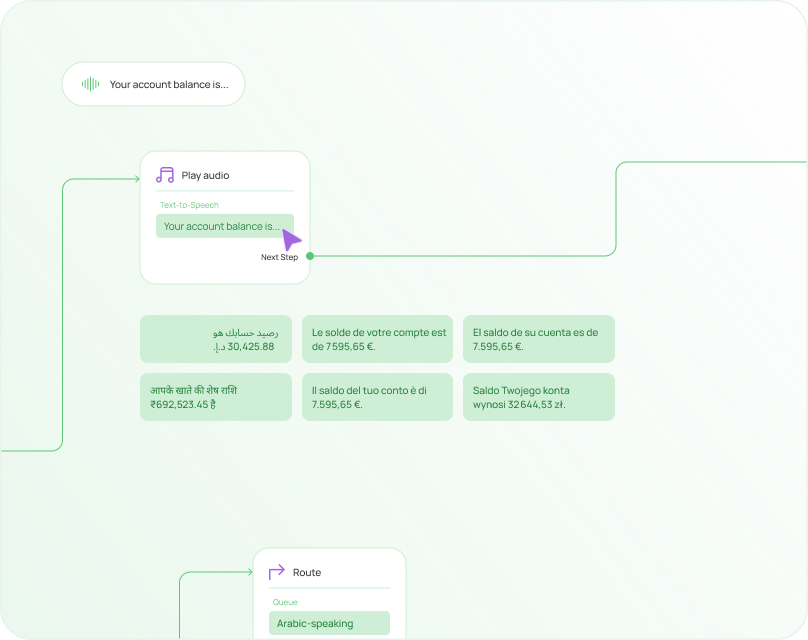
Automated self-service reduces support workload by handling routine inquiries through text-to-speech announcements, natural language processing that understands spoken requests, and real-time CRM lookups that retrieve account information instantly. Customers check order statuses, payment due dates, appointment schedules, or account balances without waiting for human agents. The call flow builder lets you design conversational experiences where callers describe needs in plain language rather than navigating rigid phone menu hierarchies. Common questions receive immediate answers, while complex issues route to appropriate specialists automatically. This approach improves customer satisfaction by providing instant resolutions for simple matters while freeing contact center staff to focus exclusively on situations requiring human judgment and personalized assistance.
What is a call flow builder?
A call flow builder is a visual design platform that enables organizations to create automated customer interaction pathways for phone systems and digital messaging channels without writing code. Businesses use this technology to route calls intelligently based on caller needs, time-of-day, agent availability, or customer data retrieved from integrated databases. The builder presents workflow components as draggable blocks representing actions like playing messages, collecting input, checking conditions, or transferring to departments. Users connect these elements visually to map complete customer journeys from initial contact through resolution. Modern platforms support both voice IVR menus and messaging automation, unifying multi-channel communication management within one intuitive interface designed for business users rather than developers.
How does a call flow builder improve customer communication?
Implementing structured call flows ensures customers reach the right resources quickly without frustrating transfers between departments or lengthy explanations repeated to multiple agents. Intelligent routing directs inquiries to specialists equipped to resolve specific issues, reducing handle times and improving first-contact resolution rates. Automated self-service options provide instant answers to common questions, eliminating wait times for routine matters like checking balances or appointment confirmations. The flow builder enables personalization, recognizing returning customers and tailoring experiences based on their history, preferences, or current account status. Consistency improves as every caller navigates identical, optimized paths rather than depending on individual agent judgment. Organizations update workflows instantly when processes change, maintaining accuracy across all customer touchpoints.
Is call flow technology suitable for small businesses as well as enterprises?
Cloud-based flow builder platforms scale appropriately for organizations of any size, from solo practitioners managing basic phone menus to multinational corporations orchestrating complex contact center operations across regions. Small businesses benefit from professional-grade IVR capabilities previously accessible only to large enterprises with substantial IT budgets. The technology eliminates needs for expensive on-premise hardware or specialized technical staff. Growing companies expand call routing complexity as their operations mature, adding sophistication incrementally without platform migrations. Subscription pricing models make advanced features affordable at every stage. Enterprises appreciate robust integration ecosystems, multi-tenant architecture for managing divisions separately, and granular analytics across thousands of simultaneous calls. Deployment speed benefits all sizes equally, most organizations activate functional workflows within hours.
What features should a call flow builder include?
Essential capabilities include drag-and-drop visual design that eliminates coding requirements, allowing business users to create and modify workflows independently. Multi-channel support enables unified management of voice call routing alongside messaging automation for SMS, WhatsApp, and web chat. CRM integration pulls customer data to personalize experiences and route calls based on account attributes or interaction history. Text-to-speech converts written content into natural-sounding audio announcements, while speech recognition interprets caller responses to open-ended questions. Conditional logic branches workflows based on inputs, time, or external data lookups. Real-time analytics track how customers navigate paths, revealing bottlenecks requiring optimization. Template libraries accelerate development with pre-built patterns for common scenarios like appointment scheduling or order status inquiries.
Can workflows be created without coding knowledge?
Modern call flow builder platforms operate entirely through visual interfaces requiring zero programming expertise. Users design customer journeys by dragging functional blocks onto canvases and connecting them with arrows representing conversation paths. Configuration happens through forms and dropdown menus rather than script editors or command lines. The builder validates logic automatically, preventing impossible routing scenarios or dead-end paths that could trap callers. Natural language descriptions explain what each component does, making functionality accessible to marketing managers, operations staff, or customer service leaders without technical backgrounds. This democratization of automation empowers departments to iterate rapidly based on customer feedback rather than waiting for overburdened IT teams. Most users create functional IVR menus within their first session, typically requiring under thirty minutes from concept to working prototype.
Does it support conditional routing based on caller behaviour?
Advanced call flow builders route calls dynamically based on real-time caller actions, input patterns, and behavioral signals captured during the interaction. Workflows can branch differently when customers select specific IVR menu options, speak certain keywords detected through natural language processing, or exhibit frustration indicators like repeated menu navigation. Integration with CRM platforms enables routing decisions based on purchase history, support ticket status, loyalty tier, or previous contact patterns. Time-based conditions adjust paths depending on business hours, seasonal campaigns, or agent availability. The flow builder evaluates multiple criteria simultaneously, creating highly personalized experiences, for example, directing frequent callers with open escalations immediately to senior support while guiding new prospects through qualification questions before reaching sales representatives.
How is customer data protected within automated call flows?
Enterprise-grade call flow platforms encrypt all transmitted information, including voice recordings, input data, and CRM lookups, both during transmission and when stored in cloud infrastructure. Access controls ensure only authorized personnel can view sensitive customer details or modify workflows handling protected information. Compliance frameworks like PCI-DSS govern payment card data collection through IVR systems, requiring specific security protocols the builder enforces automatically. Audit trails log every workflow modification, documenting who changed what and when for regulatory oversight. Data residency options allow organizations to store recordings and transcripts in specific geographic regions meeting local privacy regulations. Integration authentication uses secure tokens rather than embedded credentials, preventing unauthorized system access. Regular security assessments identify vulnerabilities before deployment to production environments.