


AI SPEECH ANALYTICS
See what every
call reveals.
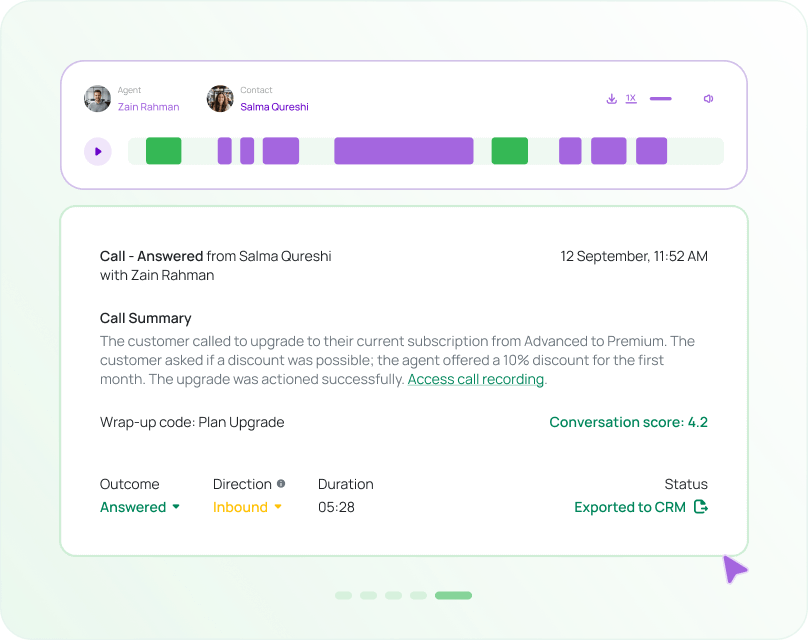
TabaTalk turns every conversation into insight. From transcriptions and topics to call scores and summaries, it gives you a clearer view of your customer experience and team performance in 10+ languages.










to understand the call.
Stay in sync,
without the stress
More ways TabaTalk
helps you deliver.
Every channnel,
one workspace.
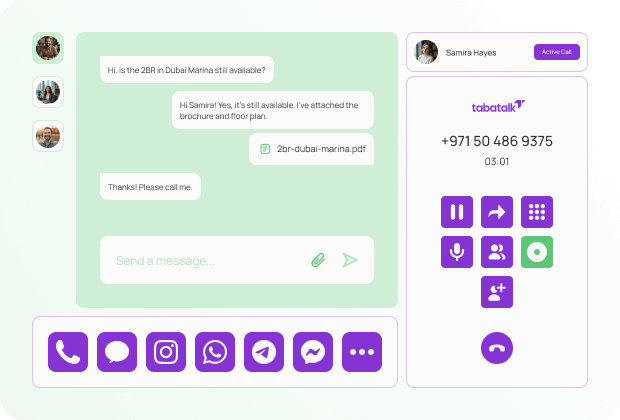
Connect faster. Stay focused.
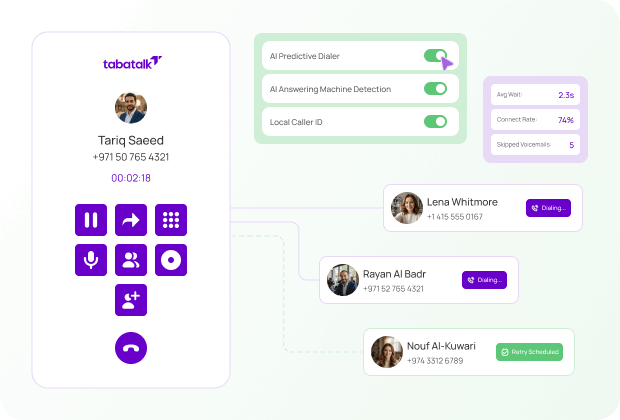
Build journeys
that work.
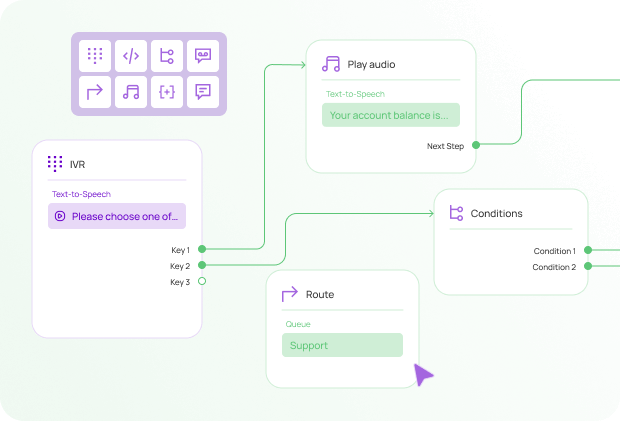
See what matters, when it matters.
Ready
when you are.
wondering
What is AI Speech Analytics?
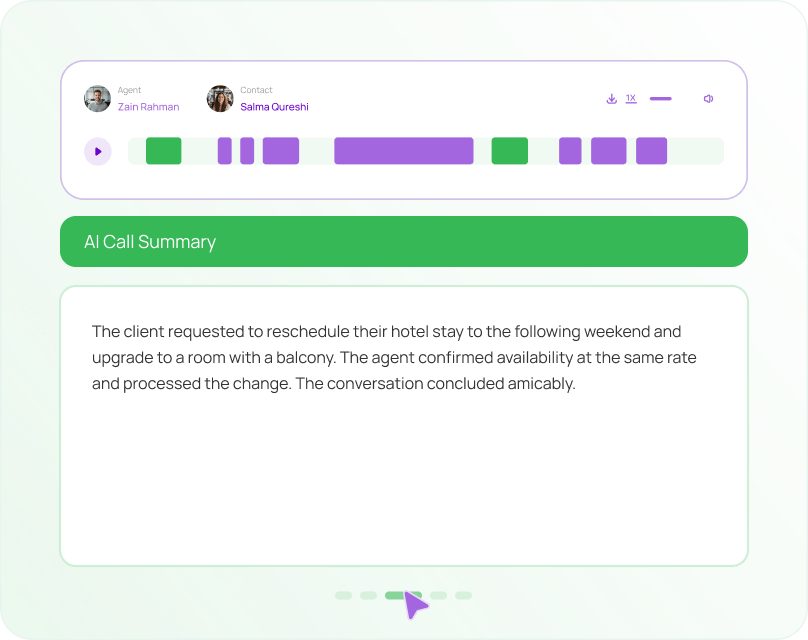
AI speech analytics software leverages machine learning algorithms to automatically analyze recorded conversations, extracting valuable insights without manual review. The technology transcribes calls with high accuracy, identifies emotional sentiment throughout interactions, evaluates agent performance through automated scoring systems, and tracks recurring topics across thousands of conversations simultaneously. Unlike manual quality monitoring that samples only small percentages of calls, this solution examines every customer interaction comprehensively. Real-time speech recognition converts spoken words into searchable text instantly, while post-call analysis provides deeper contextual understanding. Organizations gain visibility into compliance adherence, coaching opportunities, sales effectiveness, and customer experience trends that would remain invisible through traditional sampling methods. The platform surfaces actionable insights automatically, transforming raw voice data into strategic intelligence.
Can I see transcripts in real time?
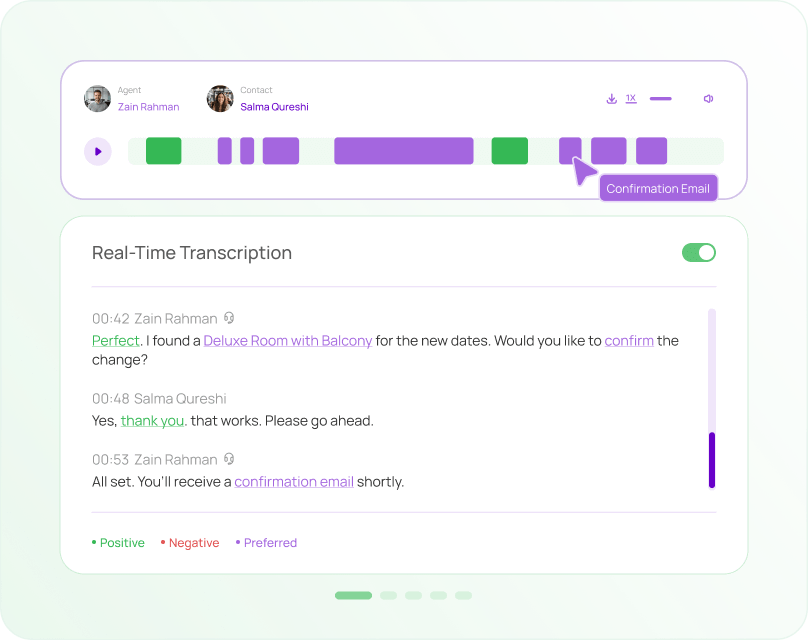
TabaTalk enables live transcription monitoring, allowing supervisors to follow conversations as they unfold word-by-word during active calls. This capability proves invaluable when coaching agents through complex situations or monitoring compliance-sensitive interactions requiring immediate intervention. The system converts speech to text with minimal latency, typically displaying words within one or two seconds after they're spoken. Managers can observe multiple simultaneous conversations through dashboard views, jumping into specific interactions when keywords or sentiment triggers indicate potential issues. Once calls conclude, complete transcripts become available immediately for thorough review and analysis. Search functionality lets users locate specific phrases or topics across entire conversation archives, making historical data accessible within seconds rather than requiring hours of manual listening.
Where can I access speech analytics data?
All conversation insights including transcripts, quality scores, sentiment trends, and topic frequency appear within dedicated Call Detail Records (CDR) accessible through TabaTalk's interface. Each recording links to its corresponding analytics, creating comprehensive interaction profiles viewable with single clicks. Teams using CRM platforms like Salesforce, HubSpot, or Zoho benefit from automatic synchronization that pushes transcription and scoring insights directly into customer records. This integration eliminates manual data transfer between systems, ensuring sales and support teams access complete conversation context when engaging customers. Customizable dashboards aggregate metrics across agents, departments, or time periods, revealing patterns that inform strategic decisions. Exported reports support compliance documentation and executive presentations. The cloud-based architecture ensures remote access from any location, enabling distributed management teams to monitor performance regardless of physical office presence.
What languages are supported?
AI-powered speech analytics software currently provides transcription accuracy across multiple languages including English, Arabic, Hindi, Spanish, German, Italian, French, Dutch, Portuguese, and Polish. This multilingual capability enables international organizations to analyze customer conversations consistently regardless of geographic market or agent location. The system automatically detects which language is being spoken, applying appropriate speech recognition models without requiring manual configuration before each call. Sentiment analysis algorithms account for cultural communication patterns specific to different languages, ensuring emotional tone interpretation remains accurate across diverse linguistic contexts. Organizations serving multilingual customer bases gain unified analytics despite language diversity, comparing performance metrics across regions using standardized scoring frameworks. TabaTalk continues expanding language support based on customer demand and regional market priorities.
Can I customize which topics are tracked?
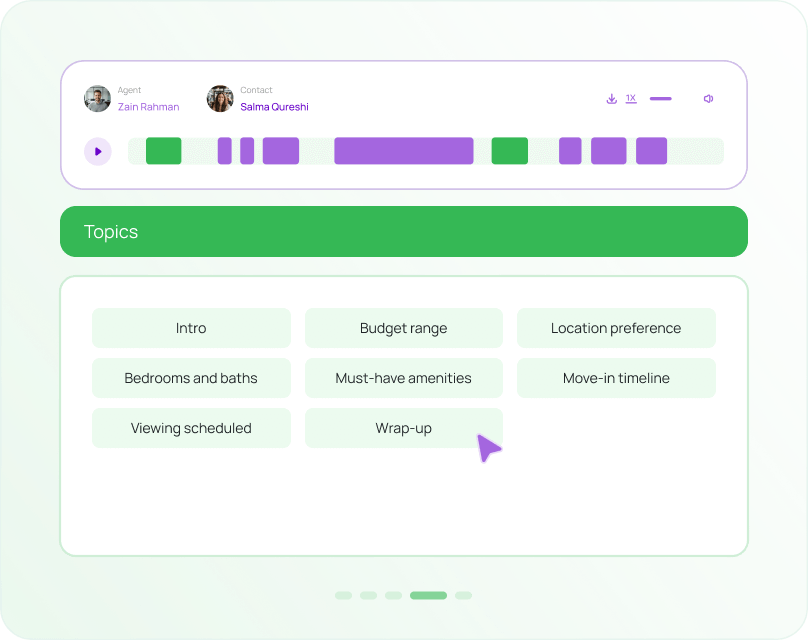
Currently, TabaTalk provides a curated collection of pre-configured topics covering common business scenarios, compliance requirements, and customer service situations. These built-in categories enable immediate value without setup delays, tracking mentions of competitors, pricing discussions, refund requests, technical issues, and numerous other relevant conversation themes. The platform's machine learning continuously refines topic detection accuracy as it processes more interactions. Custom topic creation functionality is planned for future releases, which will allow organizations to define industry-specific terminology, product names, or unique business processes they need monitored. This upcoming enhancement will enable companies to track precisely what matters most to their operations. Meanwhile, the existing topic library provides comprehensive coverage for most standard use cases across industries, delivering immediate actionable insights from day one of deployment.
How does AI speech analytics differ from traditional voice analytics?
Traditional voice analysis relies on manual sampling where quality teams review small percentages of total call volume, often examining only 1-2% of interactions. AI-powered speech analytics tools automatically analyze 100% of conversations using machine learning algorithms that identify patterns, sentiment shifts, and compliance issues without human intervention. Legacy approaches require extensive listening time to extract insights; modern AI speech analytics software processes thousands of recordings simultaneously, surfacing critical findings within minutes. Human reviewers introduce subjective biases and inconsistent scoring; automated systems apply standardized evaluation criteria uniformly. Real-time capabilities enable live monitoring and immediate coaching, whereas traditional methods provide delayed feedback after conversations conclude. The scalability difference proves dramatic, AI solution handles enterprise-level call volumes that would require impossibly large quality teams manually.
How does AI interpret customer conversations?
Advanced speech recognition technology first converts spoken dialogue into accurate text transcripts, forming the foundation for deeper analysis. Natural language processing algorithms then examine word choices, phrase patterns, and conversation structure to understand intent and meaning beyond literal transcription. Sentiment analysis evaluates emotional tone by detecting vocal characteristics like pitch variations, speaking pace, and word emphasis that indicate frustration, satisfaction, or confusion. The system identifies keywords and phrases associated with specific business outcomes, purchase intent signals, churn risk indicators, or complaint escalation patterns. Machine learning models trained on millions of previous interactions recognize contextual nuances, distinguishing between similar phrases used in different situations. The technology collects multiple data layers simultaneously: what was said, how it was said, when topics shifted, and which agent responses correlated with positive resolutions.
Is AI speech analytics suitable for small businesses as well as enterprises?
Cloud-based speech analytics platforms scale appropriately for organizations of any size, from small teams handling dozens of daily calls to large contact centres processing thousands of simultaneous conversations. Small businesses gain enterprise-grade conversation insights previously accessible only to corporations with substantial technology budgets. The subscription pricing model makes advanced AI speech analytics software affordable regardless of company scale. Growing organizations expand usage seamlessly as call volumes increase, adding users or features without infrastructure investments or lengthy implementations. Enterprises appreciate sophisticated integration capabilities, multi-tenant architecture supporting divisions separately, and granular analytics across geographic regions. Deployment speed benefits all company sizes equally, most platforms activate within days rather than months. The technology delivers proportional value: smaller teams identify coaching opportunities quickly, while larger operations uncover systemic trends across thousands of agents.
What features should AI speech analytics platforms include?
Essential capabilities encompass automatic transcription supporting multiple languages with high accuracy, enabling searchable archives of customer conversations. Sentiment analysis must track emotional tone throughout interactions, flagging frustration or satisfaction patterns. Automated scoring evaluates agent performance against customizable quality criteria, providing consistent evaluation across all calls. Topic detection identifies frequently discussed themes, competitor mentions, compliance phrases, and business-specific terminology. Real-time monitoring allows supervisors to observe live conversations and intervene when necessary. Integration with CRM systems ensures insights sync directly to customer records without manual data entry. Customizable dashboards should visualize trends across agents, teams, departments, or time periods. Call recording storage with secure access controls protects sensitive customer information. Coaching workflows must help managers share specific conversation examples with agents, turning analytics into development actions. Compliance reporting tracks regulatory adherence systematically.
How does sentiment analysis improve customer interactions?
Detecting emotional tone during conversations enables immediate intervention when customers exhibit frustration, preventing situations from escalating into complaints or churn. Supervisors monitoring real-time speech sentiment can whisper guidance to agents struggling with difficult interactions, improving resolution likelihood. Post-call analysis reveals which agent behaviors correlate with positive sentiment shifts, informing coaching priorities and best practice development. Understanding emotional patterns across customer journeys identifies friction points in processes or products requiring attention. Agents receive feedback showing how their communication style impacts customer experience, developing empathy and refinement through concrete examples. Sales teams leverage sentiment insights to recognize buying signals, timing proposals when prospects express enthusiasm. The technology helps organizations prioritize follow-up efforts, focusing retention resources on customers whose sentiment scores indicate dissatisfaction risk. Aggregate sentiment trends provide early warning systems for emerging product issues or service delivery problems before they affect broader populations.
Does AI speech analytics integrate with CRM systems?
Modern AI-powered speech analytics software connects natively with popular CRM platforms including Salesforce, HubSpot, Zoho, and Microsoft Dynamics through pre-built integration connectors. Conversation transcripts, quality scores, sentiment ratings, and identified topics synchronize automatically to corresponding customer records, eliminating manual data entry between systems. Sales representatives viewing prospect profiles see complete call history with searchable transcription, understanding previous discussions without listening to entire recordings. Support agents access interaction analytics instantly, recognizing recurring issues or frustrated customers requiring special handling. The bidirectional data flow enriches both platforms, CRM information like account value or subscription tier informs call routing and analysis prioritization. Managers generate unified reports combining conversation insights with pipeline metrics, customer lifetime value, or support ticket patterns. API connectivity enables custom integrations with proprietary business systems, ensuring analytics data reaches wherever teams need it most.
Can AI-driven analytics support remote contact centre teams?
Cloud-based speech analytics platforms enable comprehensive performance monitoring regardless of where agents physically work, providing identical oversight for remote, hybrid, or office-based teams. Supervisors access live transcription and sentiment monitoring from any location, maintaining quality standards across distributed workforces. The technology eliminates geography as an excuse for inconsistent coaching, managers review recordings and share specific interaction examples with remote agents just as easily as with on-site staff. Automated scoring ensures objective performance evaluation independent of supervisor proximity or observation frequency. Remote team members receive data-driven feedback based on actual conversation analysis rather than subjective impressions from occasional monitoring. The solution supports asynchronous coaching workflows where managers and agents collaborate across different time zones, reviewing insights and discussing improvements without requiring simultaneous availability. Compliance tracking maintains standards universally, protecting organizations from regulatory risks introduced by decentralized operations.
How does AI analysis support sales performance?
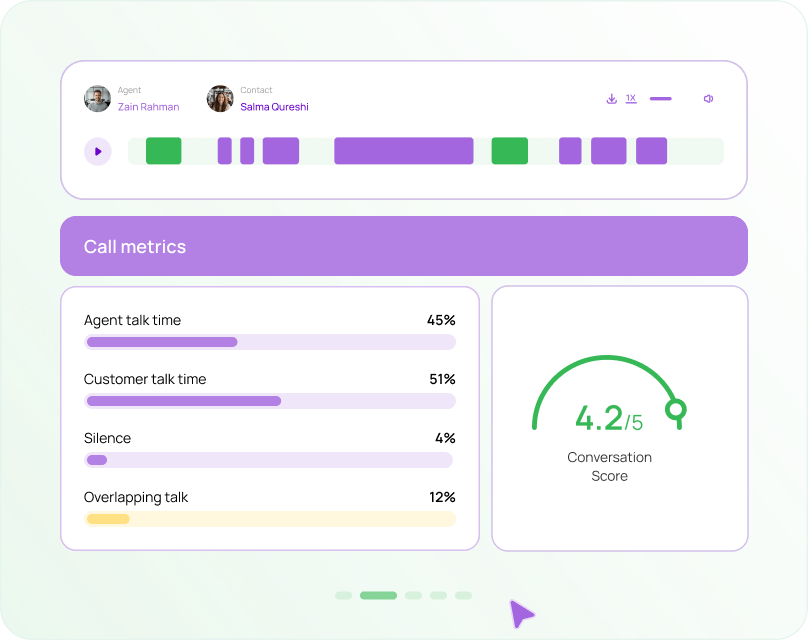
Conversation analytics identifies specific phrases, objection-handling techniques, and discovery questions that correlate with successful deal closures, enabling replication of winning behaviors across entire sales teams. Managers pinpoint which representatives excel at particular selling stages, building rapport, presenting value propositions, overcoming price resistance, then share those recorded examples during coaching sessions. The technology tracks talk-to-listen ratios, revealing agents who dominate conversations versus those who ask questions effectively. Competitive mention detection shows how often prospects compare offerings to alternatives and which counterpoints prove most persuasive. Sentiment analysis highlights when interest peaks or wanes during demonstrations, informing presentation structure improvements. Automatic scoring evaluates adherence to proven sales methodologies, ensuring consistency across teams. Topic tracking reveals emerging customer needs or market trends before they appear in formal feedback channels. These insights transform intuition-based management into evidence-driven optimization that accelerates revenue growth systematically.
Can it identify customer dissatisfaction early?
Real-time sentiment analysis detects emotional shifts during active conversations, alerting supervisors when frustration levels rise so they can intervene before customers escalate complaints or abandon relationships. The system recognizes specific language patterns associated with dissatisfaction, demanding supervisor escalation, threatening to cancel services, or expressing disappointment repeatedly. Voice analytics examines acoustic features like increased speaking volume, faster pace, or vocal tension that indicate negative emotional states even when words remain superficially polite. Historical pattern recognition flags customers whose conversation sentiment deteriorated across multiple interactions, identifying churn risks requiring proactive retention outreach. Post-call analysis scores satisfaction levels automatically, enabling follow-up workflows targeting unhappy customers before they churn. Topic detection identifies recurring complaint themes, revealing product defects or service delivery failures requiring immediate attention. Aggregate trends show dissatisfaction spreading across customer segments, providing early warning systems for systemic issues.
Are transcripts securely stored?
Enterprise-grade encryption protects all transcription data both during transmission from recording systems to analytics platforms and when stored in cloud infrastructure. Access controls ensure only authorized personnel with legitimate business needs can view sensitive customer conversations or agent performance records. Compliance frameworks like PCI-DSS, HIPAA, or GDPR govern how conversation data containing protected information gets handled, with the speech analytics software enforcing appropriate security protocols automatically. Audit trails document who accessed which recordings and when, supporting regulatory oversight requirements. Data retention policies automatically delete older transcripts according to legal requirements or company policies, minimizing long-term storage risks. Geographic data residency options allow organizations to store recording archives in specific regions meeting local privacy regulations. Role-based permissions prevent unauthorized disclosure, agents might access their own call transcripts while only managers view team-wide analytics. Regular security assessments identify vulnerabilities before deployment to production environments.