



AI Contact Centre Software
Smarter conversations,
powered by AI.
TabaTalk AI brings intelligence into every interaction. From recognizing intent to surfacing insights in real time, our AI tools are designed to make customer conversations clearer, faster, and more human.


less effort.
behind every call.
made simple.

Built for every
type of team.
Turn leads into
conversations.
Help customers,
faster.
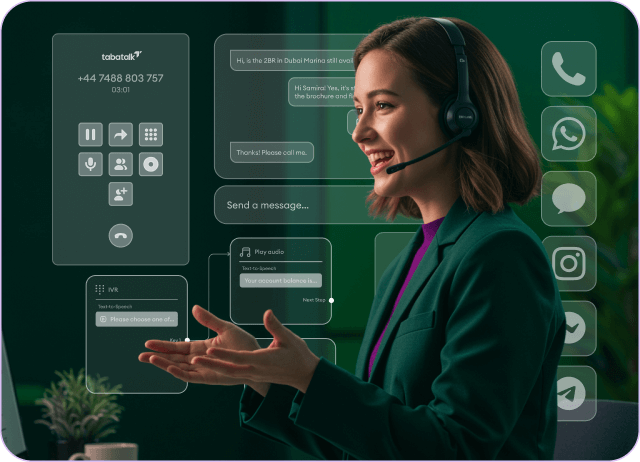
Stay connected, everywhere.
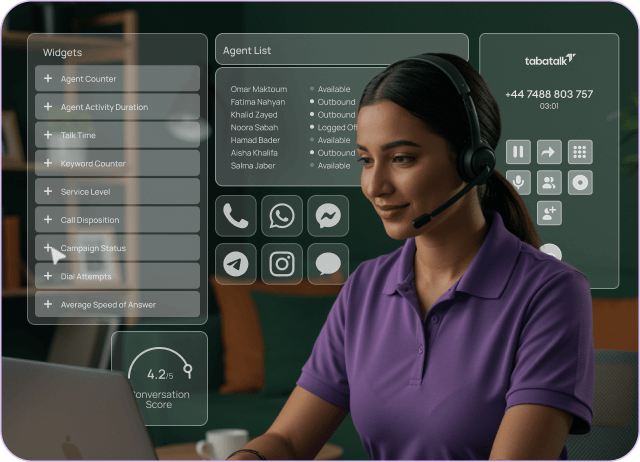
Ready
when you are.
wondering
What makes TabaTalk’s AI different?
TabaTalk's AI technology prioritizes natural, contextual conversations over rigid scripted interactions, enabling customer service that feels genuinely human rather than robotic. The system comprehends conversational nuance, understanding intent even when customers express needs indirectly or use colloquial language. Multilingual capabilities span Arabic, English, and other regional languages commonly spoken throughout the GCC, with accent recognition optimized for diverse dialects. Unlike generic AI tools designed for global markets, this platform was purpose-built for Middle Eastern business environments, incorporating cultural communication patterns and local compliance requirements natively. The technology adapts dynamically to fast-changing business needs without requiring extensive reprogramming, empowering teams to modify responses, update knowledge bases, and refine automation workflows independently. This regional focus combined with conversational sophistication distinguishes TabaTalk from generic contact center solution providers.
Does AI replace live agents?
AI augments human capabilities rather than eliminating jobs, handling routine inquiries that don't require empathy, complex judgment, or creative problem-solving. Virtual agents manage frequently asked questions, account balance checks, appointment scheduling, and order status requests, freeing contact centre staff to focus on complicated situations where personal attention creates meaningful value. The technology recognizes when conversations exceed its capabilities and transfers seamlessly to human representatives, preserving context so customers never repeat information. This hybrid approach improves agent performance by eliminating monotonous tasks that cause burnout while increasing job satisfaction through more engaging work. Teams become more productive as AI handles volume surges without additional hiring, while experienced agents develop specialized expertise in areas requiring human insight. Organizations typically expand their workforce strategically, redeploying staff toward higher-value activities rather than reducing headcount.
Can AI really understand different languages and accents?
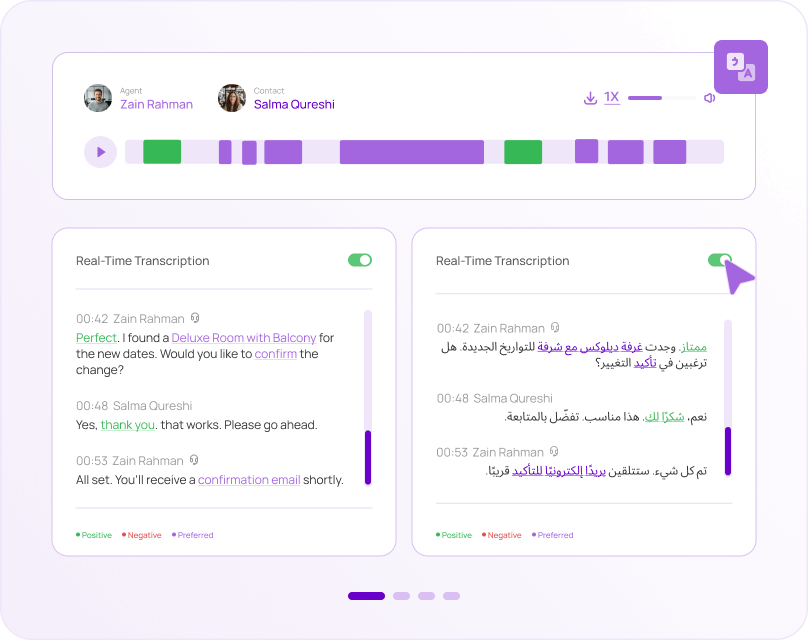
Advanced speech recognition trained on diverse linguistic datasets enables TabaTalk's AI to comprehend multiple languages and regional accent variations accurately. The system processes Arabic dialects prevalent across Gulf countries alongside English spoken with various accents, ensuring inclusive customer experience regardless of caller's background. Machine learning continuously improves recognition accuracy as it processes more conversations, adapting to specific terminology, pronunciation patterns, and communication styles unique to each organization's customer base. Natural language processing analyzes meaning beyond literal word transcription, understanding intent even when phrasing differs from standard training examples. This linguistic flexibility proves essential for businesses serving multicultural populations throughout the GCC region where customers may switch between languages mid-conversation or use mixed vocabulary. The technology maintains comprehension quality across channels, voice calls, chat messaging, email, providing consistent automation benefits regardless of communication medium customers prefer.
How quickly can we start using AI features?
Most organizations activate AI capabilities within days rather than months, benefiting from cloud-based architecture that eliminates lengthy on-premise installations. TabaTalk provides pre-configured automation templates covering common use cases like appointment booking, FAQs, order tracking, and basic troubleshooting, accelerating initial deployment significantly. Teams customize these foundations using intuitive interfaces requiring no coding expertise, adapting responses and workflows to match specific business processes. Integration with existing call center infrastructure happens through standard connectors, avoiding disruptive technology replacements. The platform supports phased rollouts where businesses test AI with limited customer segments before expanding broadly, reducing implementation risk. Training requirements remain minimal because the system learns from existing conversation patterns, analyzing historical interactions to understand appropriate responses. This rapid activation timeline means organizations realize efficiency gains and improved customer service almost immediately after commitment.
Is AI secure for sensitive industries?
Enterprise-grade security protocols protect customer data processed through AI systems, employing encryption for information transmitted across networks and stored in cloud infrastructure. Compliance frameworks governing financial services, healthcare, telecommunications, and other regulated sectors are embedded natively, ensuring automation adheres to industry-specific privacy requirements. Access controls restrict which personnel can view conversation transcripts, modify AI behavior, or extract analytics, maintaining confidentiality throughout the customer journey. Regular security audits identify vulnerabilities before they become exploitable risks, while penetration testing validates defense mechanisms against sophisticated attacks. Data residency options allow organizations to store sensitive information within specific geographic regions meeting local regulatory mandates. The AI processes requests without retaining personally identifiable details unnecessarily, minimizing exposure even if breaches occur. These comprehensive safeguards make the technology suitable for industries handling confidential customer information requiring maximum protection.
What is AI contact centre software?
AI contact centre software integrates artificial intelligence capabilities into customer service platforms, automating routine interactions while enhancing human agent productivity through intelligent assistance. The technology encompasses virtual agents handling straightforward inquiries independently, speech analytics extracting insights from conversations automatically, and intelligent routing directing customers to appropriate resources based on intent, urgency, or complexity. Natural language processing enables systems to understand customer requests expressed conversationally rather than requiring specific keywords or menu navigation. Machine learning continuously improves performance by analyzing millions of interactions, identifying patterns that inform better responses and more efficient workflows. Cloud-based deployment ensures accessibility for distributed teams without expensive infrastructure investments. Integration with CRM systems, predictive dialer tools, and quality management platforms creates unified ecosystems where AI enhances every aspect of customer engagement operations.
How does AI enhance traditional contact centre technology?
Artificial intelligence transforms basic call center functionality by adding predictive capabilities, automation efficiency, and analytical depth impossible through manual processes. Traditional systems route calls based on simple rules; AI employs intelligent routing that analyzes caller history, sentiment, and intent to match customers with ideally suited agents. Manual quality reviews sample tiny percentages of interactions; interaction analytics examines every conversation systematically, surfacing coaching opportunities and compliance issues automatically. Legacy approaches require customers to navigate rigid phone menus; conversational AI understands natural language requests, eliminating frustrating button-press sequences. The technology predicts staffing requirements more accurately than historical averaging, optimizing workforce allocation. Real-time agent assistance suggests responses during live calls, improving first-contact resolution rates. These enhancements multiply operational efficiency while simultaneously elevating customer experience through personalization, speed, and accuracy improvements.
Can AI support remote or distributed customer service teams?
Cloud-based AI contact centre software enables seamless operations across geographically dispersed workforces, providing identical capabilities to agents regardless of physical location. Virtual agents handle initial customer interactions consistently whether human representatives work from headquarters, home offices, or satellite facilities, maintaining service quality standards across all environments. Centralized AI systems ensure distributed teams access the same knowledge bases, automation workflows, and intelligent routing logic, eliminating inconsistencies that plague decentralized operations. Supervisors monitor remote agent performance through analytics dashboards tracking productivity metrics, quality scores, and customer satisfaction ratings without physical observation requirements. The technology supports asynchronous collaboration where team members across time zones contribute to continuous improvement through shared insights. Security protocols protect sensitive data regardless of connection origin, enabling work-from-anywhere models without compromising compliance. This flexibility expands talent pools beyond geographic constraints while reducing facility costs.
What features should AI contact centre platforms include?
Comprehensive AI contact center solution platforms must offer conversational virtual agents capable of handling common inquiries independently through natural dialogue. Speech analytics should transcribe calls automatically, analyze sentiment, identify topics, and evaluate agent performance against quality standards. Intelligent routing capabilities direct customers to optimal resources based on multiple factors including intent, history, language preference, and current queue conditions. Real-time agent assistance provides suggested responses, relevant knowledge articles, and next-best-action recommendations during live interactions. Predictive workforce management forecasts staffing needs accurately using historical patterns and machine learning algorithms. Quality management automation scores interactions systematically rather than relying on manual sampling. Integration capabilities must connect seamlessly with existing CRM systems, telephony infrastructure, and business applications. Customizable automation allows organizations to tailor AI behavior matching specific processes without vendor dependencies. Robust analytics dashboards visualize trends informing strategic decisions about operations, training, and customer experience improvements.
How does AI improve customer experience?
Artificial intelligence reduces wait times dramatically by resolving routine inquiries instantly through virtual agents available 24/7 without staffing constraints. Customers receive consistent, accurate information regardless of when they contact organizations or which channel they choose, voice, chat, email, or messaging apps. Intelligent routing connects people with appropriately skilled agents immediately rather than transferring between multiple departments, minimizing frustrating repetition. Personalization improves as AI systems recognize returning customers automatically, accessing interaction history to provide contextually relevant service without requiring account number recitations. Proactive outreach identifies issues before customers complain, enabling preemptive resolution that builds loyalty. Natural language understanding eliminates rigid menu navigation, allowing people to describe needs conversationally. Sentiment analysis detects frustration early, triggering escalation protocols before situations deteriorate. These combined enhancements create seamless, efficient, personalized experiences that exceed expectations while reducing organizational costs simultaneously.
Does AI contact centre software integrate with CRM systems?
Modern AI platforms connect natively with popular CRM solutions including Salesforce, HubSpot, Zoho, and Microsoft Dynamics through pre-built integration connectors requiring minimal configuration. This connectivity enables AI agents to retrieve customer information during conversations, providing personalized responses based on purchase history, support tickets, subscription status, or loyalty tier. Intelligent routing uses CRM data to prioritize high-value customers or direct inquiries to agents familiar with specific accounts. Conversation transcripts, sentiment scores, and interaction summaries synchronize automatically to customer records, eliminating manual data entry while ensuring complete relationship visibility. The bidirectional flow enriches both platforms, AI systems gain context improving service quality while CRM databases receive updated contact information and engagement insights. API connectivity supports custom integrations with proprietary business systems beyond standard platforms. This seamless data exchange creates unified customer views informing better decisions across sales, marketing, and support organizations.
Is AI contact centre technology suitable for small businesses?
Cloud-based AI solutions scale appropriately for organizations ranging from small teams to enterprise contact centers, with subscription pricing making advanced capabilities affordable regardless of company size. Small businesses gain access to virtual agents, automation tools, and analytics previously available only to large corporations with substantial technology budgets. The platforms eliminate infrastructure investments, no servers, telephony equipment, or extensive IT staffing required. Setup timelines span days rather than months, enabling rapid value realization without prolonged implementation projects. As companies grow, they expand AI usage seamlessly by adding features, users, or communication channels without platform migrations. Intuitive interfaces require minimal training, allowing small teams to manage sophisticated automation independently. These solutions level competitive playing fields, empowering smaller organizations to deliver customer service rivaling much larger competitors while maintaining cost efficiency that preserves profitability margins critical for growth-stage businesses.