


Support Contact Center Software
Service clarity, customer confidence.
TabaTalk helps high-volume support teams manage conversations with speed and clarity. From first contact to full resolution, it’s built for responsiveness and scale.










Every channel covered,
every customer cared for.
Every customer.
One conversation.
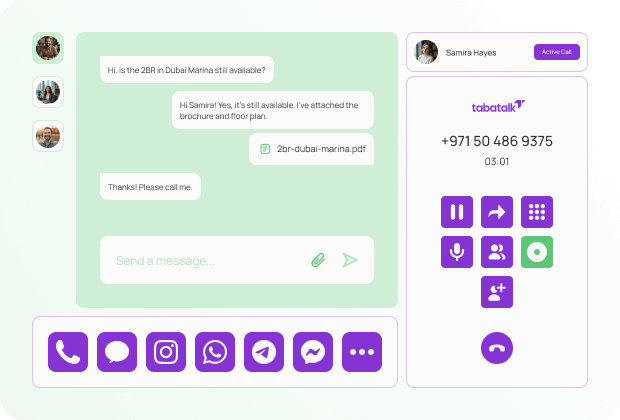
Structure
without slowdown.
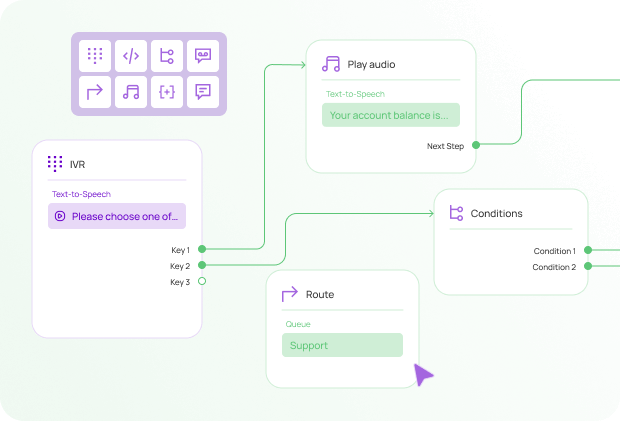
Know what’s working. See what isn’t.
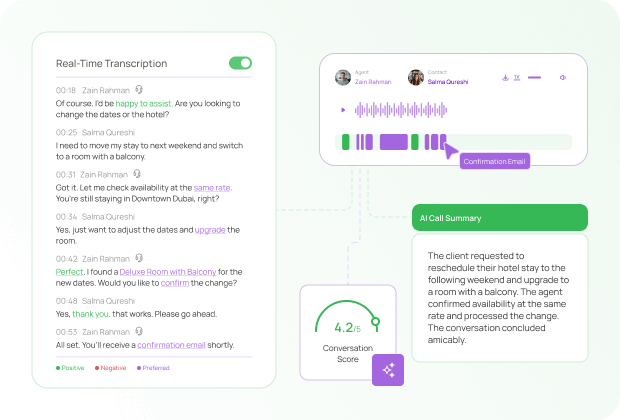
Complete visibility.
Continuous control.
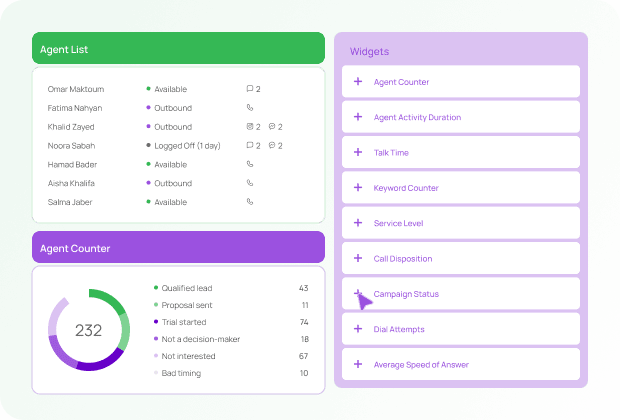
Stay in sync,
without the stress.
Stronger outcomes.





 Available
Not Available
Limited
Available
Not Available
Limited
Connectivity you
can count on.

global reach
Access virtual numbers in 120+ countries instantly so your team shows up with a local presence, wherever they call from.

ready to connect
With global data centers, real-time monitoring, and 100+ carrier connections, TabaTalk delivers crystal-clear VoIP at scale.

by design
From encryption to role-based access controls, every layer of TabaTalk is built to keep your data — and your customers’ — secure.
Ready
when you are.
wondering
How long does it take to get started with TabaTalk for support?
Most teams are live and handling customer calls within 24 hours of signing up with TabaTalk. Our streamlined onboarding eliminates complex configuration, extensive training, or technical hurdles. You can provision local or toll-free numbers, set up intelligent call routing rules, configure your IVR menu, integrate with your existing helpdesk or CRM, and onboard your agents in less than a day. The cloud-based platform requires no hardware installation or IT resources. Your support team simply logs in through their browser or mobile app and starts delivering exceptional customer service immediately. This rapid deployment means you can improve your customer experience and reduce response times without disrupting current operations.
Can we route conversations based on language, topic, or agent skill?
Yes. TabaTalk's intelligent routing engine provides sophisticated call distribution based on multiple criteria. You can configure skills-based routing to match customers with agents who have specific expertise, whether that's technical support, billing inquiries, or product knowledge. Language-based routing ensures callers reach agents fluent in their preferred language. Queue priority rules let you escalate VIP customers or urgent issues. The system also considers agent availability, workload, and historical performance metrics. You can define custom routing logic using any customer data field, interaction history, or business hours. This precision matching reduces call transfers, improves first-contact resolution rates, and delivers personalized experiences that build customer loyalty and satisfaction.
Does TabaTalk handle voice, chat, email, and messaging in one place?
It does. Every channel lands in a single interface: no switching tabs, no fragmented context, no lost conversations.
Do you support local numbers in the GCC?
Yes. TabaTalk enables you to provision local, toll-free, and international numbers across 120+ countries, including comprehensive coverage throughout the GCC region and Middle East. Having local numbers significantly increases answer rates; customers are more likely to pick up calls from familiar area codes rather than unknown international numbers. You can establish dedicated support lines for different markets, departments, or customer segments. The platform supports number porting if you want to transfer existing business numbers to TabaTalk. Whether you're providing customer service in Dubai, Riyadh, Kuwait City, Doha, Muscat, or Manama, local presence builds trust and makes your support operation feel accessible and professional to regional customers.
Is it suitable for hybrid or remote support teams?
Absolutely. TabaTalk's cloud-based architecture is purpose-built for distributed customer service teams working anywhere. Agents access the full platform through web browsers or mobile apps without requiring office infrastructure, desk phones, or on-premise equipment. Team members in different cities, countries, or time zones operate from a unified system with consistent access to customer data, call queues, routing rules, and collaboration tools. Supervisors monitor performance metrics, listen to live calls, and provide coaching regardless of agent location. The platform maintains call quality and reliability across global networks. This flexibility lets you hire top support talent anywhere, maintain 24/7 coverage across time zones, scale operations cost-effectively, and ensure business continuity during disruptions or emergencies.
Will TabaTalk work with the CRM and helpdesk tools we already use?
Yes. TabaTalk seamlessly integrates with leading customer service platforms including Zendesk, Salesforce Service Cloud, HubSpot Service Hub, Freshdesk, and many others. These integrations automatically sync call data, customer interactions, and support tickets between systems in real-time. When customers call, agents instantly see their complete history, previous tickets, purchase records, interaction logs, and support notes, without switching applications. Call outcomes, recordings, and notes automatically log into your CRM or helpdesk, eliminating manual data entry. This unified workspace ensures your team has complete context for every conversation, improves resolution efficiency, and maintains accurate records across all your customer service tools. You don't sacrifice your preferred platforms for better calling capabilities.
What is inbound call center software?
Inbound call center software is a cloud-based platform that helps customer service teams efficiently manage and respond to incoming calls from customers seeking support, information, or issue resolution. The software includes features like automatic call distribution (ACD) to route calls to available agents, interactive voice response (IVR) for self-service options, skills-based routing to match customers with specialized agents, and CRM integration for complete customer context. Modern solutions like TabaTalk offer omnichannel capabilities, allowing teams to handle calls, chat, email, and messaging from a unified interface. The software provides real-time analytics, call recording, quality monitoring, and workforce management tools to optimize performance and deliver exceptional customer experiences consistently.
How does an inbound call center work?
An inbound call center operates through an integrated workflow that prioritizes customer experience and operational efficiency. When customers dial your support number, the call enters the system where IVR menus offer self-service options or collect information about their inquiry. Automatic call distribution (ACD) then routes calls to the most appropriate available agent based on skills, language, priority, or queue rules. Agents receive calls with complete customer context displayed from integrated CRM systems, showing interaction history, account details, and previous tickets. During conversations, supervisors can monitor quality, provide real-time coaching, and track performance metrics. All interactions are logged, recorded, and analyzed to improve service quality, identify training opportunities, and optimize staffing levels for consistent customer satisfaction.
How does an inbound contact centre differ from outbound operations?
Inbound contact centres handle incoming customer calls seeking support, information, or issue resolution, while outbound operations initiate proactive calls for sales, surveys, or follow-ups. Reactive service defines inbound workflows; agents respond to customer-initiated requests rather than reaching prospects. Call routing, queue management, and IVR systems prioritize incoming volume efficiently. Outbound platforms emphasize dialing automation, campaign tools, and lead list organization. Inbound teams focus on first-call resolution rates and wait time reduction. Sales conversion drives outbound metrics instead. Skill-based matching connects customers with qualified support specialists in reactive environments. Proactive calling requires different performance indicators like connect rates and pitch effectiveness. These operational distinctions demand specialized contact center software designed for each interaction model.
What types of businesses benefit most from inbound customer support platforms?
E-commerce companies handling order inquiries, returns, and product questions gain tremendous value from dedicated inbound platforms. Financial services organizations managing account support, fraud alerts, and transaction assistance require robust call routing capabilities. Healthcare providers coordinating appointment scheduling, prescription refills, and patient questions need HIPAA-compliant solutions. Technology firms offering technical troubleshooting and helpdesk support benefit from knowledge base integrations. Telecommunications companies managing service activation, billing inquiries, and network issues require omnichannel capabilities. Travel agencies coordinating bookings, cancellations, and itinerary changes need real-time customer data access. Essentially, any organization where customers initiate contact seeking assistance will find inbound contact centre software essential for delivering responsive, efficient service experiences that build loyalty and satisfaction.
What features should an inbound contact centre platform include?
Automatic call distribution (ACD) routes incoming volume to available agents based on predefined rules and priorities. Interactive voice response (IVR) enables self-service options where customers resolve simple inquiries without agent intervention. Skills-based routing matches callers with qualified team members possessing relevant expertise or language capabilities. Real-time monitoring dashboards provide supervisors visibility into queue status, service levels, and performance metrics. CRM integration displays complete customer history automatically when calls arrive, eliminating manual lookups. Call recording captures interactions for quality assurance, training, and compliance documentation. Callback options let customers maintain queue position without staying on hold. Analytics track resolution rates, satisfaction scores, and operational trends. Omnichannel support unifies voice, chat, email, and messaging. Workforce management tools optimize scheduling and forecasting.
Can calls be automatically routed to the right agents?
Absolutely. Intelligent routing technology within inbound call center software directs customers to appropriate team members based on multiple criteria simultaneously. Skills-based algorithms match caller needs with agent expertise, technical issues reach specialists, and billing questions connect to accounting teams. Language preferences ensure native speakers handle conversations requiring fluency. Priority routing escalates VIP customers or urgent matters ahead of standard queues. Time-based rules adjust distribution during peak hours or after-hours scenarios. Caller history triggers routes returning customers to previously assigned representatives for continuity. Availability status considers agent workload, preventing overburden while maintaining balanced distribution. Geographic matching pairs regional callers with local representatives when relevant. These sophisticated routing capabilities dramatically improve first-contact resolution rates and overall customer satisfaction scores.
Can it help reduce call waiting times?
Yes, significantly. Intelligent queue management within virtual contact centre software optimizes how incoming volume gets distributed across available resources. Real-time monitoring alerts supervisors to buildups, enabling dynamic reassignment of agents from lower-priority tasks. Callback functionality lets customers maintain positions without staying on hold; the system automatically dials them when representatives become available. IVR self-service resolves simple inquiries immediately, reducing overall queue depth substantially. Skills-based routing eliminates transfers by connecting callers to qualified agents initially, shortening handle durations. Workforce analytics forecast volume patterns, helping managers schedule adequate coverage during predictable peaks. Visual dashboards show wait estimates, allowing proactive intervention before service levels deteriorate. These combined capabilities typically reduce average hold durations by 40-60% while improving customer satisfaction dramatically.
How easy is it to migrate from legacy systems?
Modern cloud contact center platforms simplify transitions through comprehensive migration support and proven methodologies. Most providers offer dedicated onboarding teams that handle technical configuration, data imports, and integration setup. Number porting transfers existing phone lines seamlessly without service disruption or customer-facing changes. CRM connections sync historical interaction data automatically, preserving valuable context. Parallel running allows testing new capabilities while maintaining current operations until confidence builds. Agent training typically requires minimal time, and intuitive interfaces reduce learning curves dramatically compared to complex legacy equipment. Phased rollouts let organizations migrate departments incrementally rather than risky all-at-once transitions. Cloud-based deployment eliminates hardware installation headaches entirely. Most businesses complete full migrations within 2-4 weeks versus months traditional implementations required, minimizing disruption while accelerating value realization.