


BPO Contact Centre Software
Made for
multi-client operations.
Manage inbound, outbound, and omnichannel campaigns with agility, visibility, and SLA confidence, all in one flexible platform.










Built for volume,
designed for clarity.
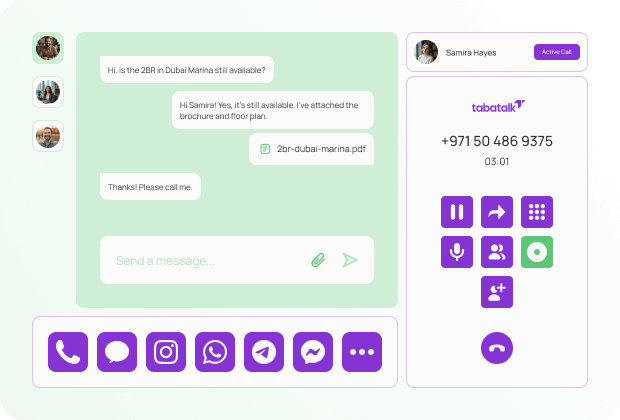
Unified channels for seamless scaling.
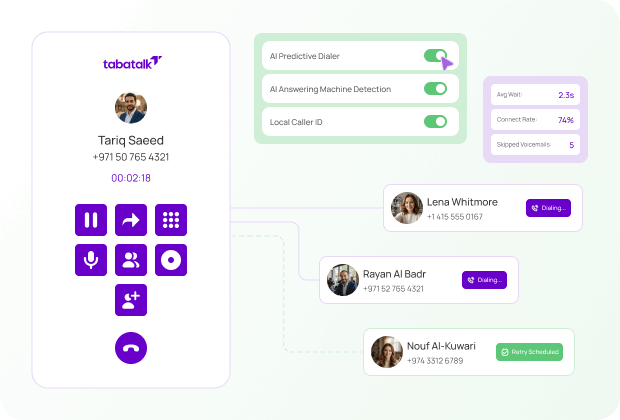
Efficient outbound campaigns.
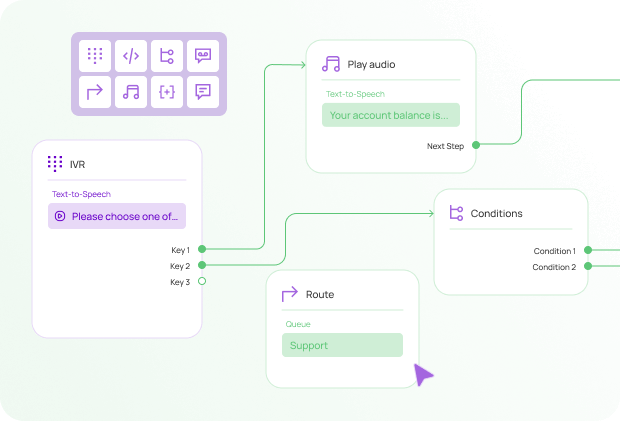
Build workflows on the fly.
Real data for real improvements.
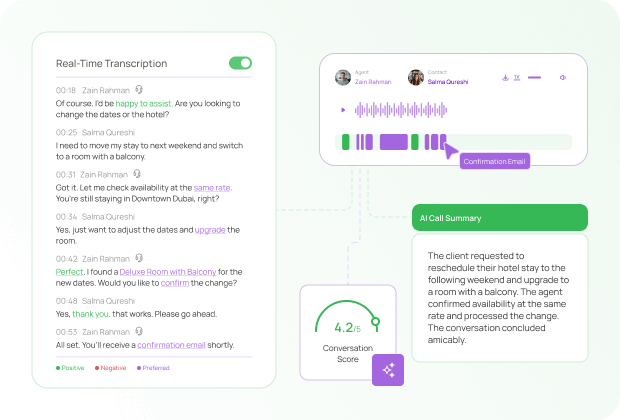
Stay on top of performance issues.
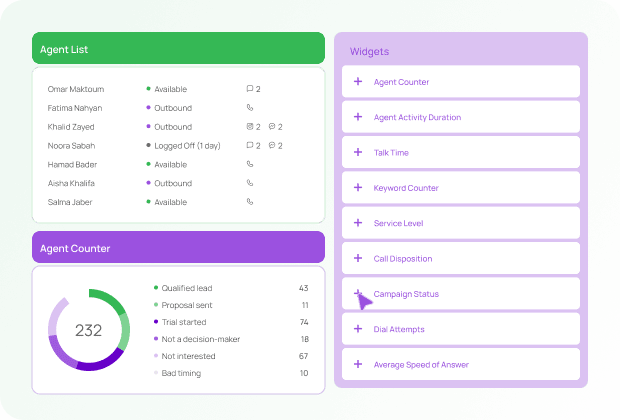
Stay in sync,
without the stress.
Stronger outcomes.





 Available
Not Available
Limited
Available
Not Available
Limited
Connectivity you
can count on.

global reach
Access virtual numbers in 120+ countries instantly so your team shows up with a local presence, wherever they call from.

ready to connect
With global data centers, real-time monitoring, and 100+ carrier connections, TabaTalk delivers crystal-clear VoIP at scale.

by design
From encryption to role-based access controls, every layer of TabaTalk is built to keep your data — and your customers’ — secure.
Ready
when you are.
wondering
Can we isolate campaigns and reports per client?
Absolutely. TabaTalk's bpo contact centre software enables complete campaign segregation through dedicated routing configurations, isolated dashboards, and client-specific reporting without any data crossover between accounts. Each contracted relationship operates within its own environment, separate call queues, performance metrics, and quality scorecards. This architecture ensures one customer's sensitive information never appears in another's reports or agent interfaces. Supervisors access consolidated views across all programs or drill into individual client performance through customizable dashboards. The platform helps bpos handle multiple campaigns simultaneously while maintaining strict data boundaries. This separation proves essential during audits, client reviews, and compliance verification processes where demonstrating information security controls becomes critical.
Can we differentiate SLAs per campaign?
Yes. TabaTalk allows granular service level agreement configuration at queue, campaign, or client levels with real-time alerting when thresholds approach violation status. Different customers demand varying response standards; some require 80% answer rates within 20 seconds while others accept 70% within 45 seconds. The platform accommodates these diverse requirements through flexible rule engines. Automated escalation workflows trigger when performance metrics indicate potential SLA breaches, enabling proactive intervention before targets actually miss. Management receives immediate notifications via dashboards, email, or SMS when campaigns trend toward non-compliance. Historical SLA tracking documents achievement patterns, supporting contract renewals and pricing negotiations. This granular control helps bpos maintain contractual obligations across diverse portfolios efficiently.
How quickly can agents ramp up?
Most representatives achieve full productivity within hours using TabaTalk's intuitive interface that requires minimal training to operate effectively across multiple client programs. The streamlined design mirrors familiar communication patterns, reducing cognitive load during onboarding. Context-sensitive help guides new team members through workflows without interrupting service delivery. Client-specific scripts, knowledge bases, and handling procedures display automatically based on campaign assignments, eliminating confusion about which protocols apply. Supervisors monitor new hire performance through dedicated dashboards, identifying coaching opportunities early. Role-based permissions prevent inexperienced staff from accessing advanced functions prematurely. This accelerated onboarding significantly reduces time-to-productivity compared to complex legacy systems requiring weeks of classroom instruction before representatives handle actual customer interactions confidently.
Can we integrate with client-specific systems?
Yes. TabaTalk provides native connectors for popular CRM platforms including Salesforce, HubSpot, Zendesk, and Microsoft Dynamics, plus helpdesk applications through pre-built integrations. For proprietary client systems, comprehensive APIs and webhook capabilities enable custom connections without extensive development resources. When customer calls arrive, representatives access complete interaction histories, account details, and case information directly within their unified workspace. Updates made during conversations sync bidirectionally, call outcomes, notes, and next actions flow automatically into client databases. This eliminates duplicate data entry while ensuring accuracy across technology ecosystems. The flexible integration architecture accommodates diverse client requirements without forcing standardization that compromises existing workflows. Technical documentation and integration support accelerate connection timelines substantially.
Does it support outbound dialing compliance?
Absolutely. Built-in compliance controls include time-zone-aware calling restrictions, automated do-not-call list scrubbing, and configurable pacing algorithms that prevent violations globally. The platform automatically calculates appropriate calling windows based on prospect locations, blocking outbound calls outside permitted hours regardless of agent time zones. DNC list management supports multiple suppression files, federal registries, state-specific lists, and client-provided opt-outs, with mandatory scrubbing before campaigns launch. Predictive dialer algorithms maintain legally compliant abandon rates through sophisticated pacing adjustments. Call recording captures consent documentation for regulatory audits. Detailed compliance reports demonstrate adherence during client reviews or regulatory examinations. These comprehensive controls protect both BPO providers and their customers from costly violations while maintaining agent productivity.
What is BPO contact center software?
BPO contact center software is specialized technology enabling outsourcing providers to manage customer interactions for multiple clients simultaneously across voice, messaging, email, and chat channels. Unlike generic solutions, this center software provides campaign isolation, client-specific reporting, flexible SLA configurations, and multi-tenant architecture essential for outsourcing contact operations. Representatives handle diverse programs, technical support, sales, collections, retention through unified interfaces that automatically display appropriate scripts, knowledge bases, and handling procedures based on campaign assignments. Advanced capabilities include intelligent routing, workforce management, quality monitoring, speech analytics, and performance dashboards optimized specifically for BPO operational models. These platforms support both inbound service delivery and outbound calling campaigns with comprehensive compliance controls protecting providers from regulatory violations.
Why do BPO companies need specialised customer service platforms?
Generic call center solutions lack a multi-client architecture essential for outsourcing environments where representatives simultaneously manage programs for competing brands, requiring strict data segregation. Without proper isolation, one customer's sensitive information could inadvertently appear in another's reports, creating liability exposure and contract violations. Specialized bpo contact software provides campaign-level configuration enabling different SLAs, routing rules, quality standards, and reporting requirements per client relationship. This flexibility proves critical when contracts demand varying service levels, compliance protocols, and performance metrics. Dedicated platforms also offer white-labeling capabilities, allowing providers to present branded experiences matching each customer's identity. Agent productivity improves through context-aware interfaces displaying relevant information automatically based on current campaign assignments. These purpose-built capabilities directly impact operational efficiency, client satisfaction, and competitive positioning.
What features should BPO customer service platforms include?
Essential capabilities include multi-tenant architecture isolating campaigns with dedicated queues, separate dashboards, and independent reporting, preventing data crossover between clients. Flexible routing engines distribute calls based on skills, languages, client assignments, or priority levels. Workforce management tools optimize scheduling across diverse programs with varying volume patterns. Quality monitoring provides call recording, evaluation scorecards, and coaching workflows supporting continuous improvement. Speech analytics automatically identifies compliance violations, customer sentiment, and training opportunities across 100% of interactions. Omnichannel support unifies voice, email, chat, SMS, and social media within a single agent interface. Predictive dialers maximize outbound productivity while maintaining compliance with automated time-zone restrictions and DNC scrubbing. CRM integrations sync customer data bidirectionally. Real-time performance dashboards enable proactive management interventions.
How does contact centre technology support outsourcing providers?
Advanced cloud-based call center saas enables BPOs to scale capacity rapidly during client onboarding or seasonal surges without infrastructure investments. Remote workforce capabilities allow global talent acquisition, reducing labor costs while extending coverage across time zones. Automated quality monitoring evaluates interactions consistently, identifying coaching opportunities and ensuring service standards remain high. Real-time dashboards provide visibility into campaign performance, enabling supervisors to intervene proactively when metrics trend negatively. Integration flexibility accommodates diverse client technology ecosystems through APIs and webhooks. Compliance automation protects providers from regulatory violations through time-zone calling restrictions, DNC management, and abandon rate controls. These capabilities transform operations from reactive firefighting into strategic execution, improving both efficiency and customer experience while reducing operational costs substantially.
Is this suitable for both small BPO firms and large global providers?
Absolutely. TabaTalk's architecture scales from boutique firms managing 10-seat operations to enterprise providers coordinating thousands of remote agents across continents. Smaller outsourcing companies benefit from rapid deployment requiring less effort than complex legacy systems, affordable subscription pricing eliminating capital expenses, and intuitive interfaces reducing training overhead. Large multinational providers leverage hierarchical permissions supporting distributed management structures, advanced reporting consolidating performance across regions, and enterprise integrations connecting proprietary technology stacks. The platform accommodates growth trajectories; firms starting with single clients expand seamlessly as portfolios diversify without disruptive migrations. Flexible pricing models align costs with actual utilization rather than forcing capacity commitments. This versatility makes TabaTalk equally effective whether operating regional call centers or coordinating global delivery networks.
What quality monitoring capabilities does TabaTalk provide for BPO environments?
Comprehensive quality assurance features include automatic call recording, capturing 100% of customer interactions for evaluation, compliance verification, and dispute resolution. Customizable scorecards assess representatives against client-specific criteria, greeting protocols, resolution effectiveness, compliance adherence, and brand representation. Speech analytics automatically identifies keywords, sentiment patterns, and compliance violations across all conversations without requiring manual review. Supervisor monitoring enables real-time listening, whisper coaching, or barge-in capabilities during live interactions. Screen recording captures complete agent activities, including data entry, navigation patterns, and system utilization. Calibration sessions ensure evaluators apply consistent standards. Performance trending identifies coaching opportunities and recognizes top performers. These capabilities transform quality management from reactive sampling into proactive performance optimization, supporting continuous improvement.
How does TabaTalk handle seasonal scaling for BPO operations?
Cloud architecture enables instant capacity adjustments, accommodating seasonal volume fluctuations without infrastructure investments or lengthy provisioning cycles. Adding temporary representatives during peak periods takes minutes through administrative controls, no hardware purchases or complex configurations required. Intelligent routing distributes increased calls across expanded teams automatically, maintaining service levels during high-pressure periods. Workforce management forecasts staffing needs based on historical patterns, enabling proactive recruitment and training. When seasonal periods conclude, scaling down happens equally quickly, ensuring costs align with actual utilization rather than fixed capacity commitments. This elasticity transforms operations from rigid planning models into dynamic resource optimization, allowing providers to confidently pursue contracts with unpredictable volume patterns or major promotional events generating temporary surges.