


AI ANSWERING MACHINE DETECTION
Built for
modern outbound teams.
Detect voicemails in real time, route agents to more live conversations, and improve outbound efficiency without adding complexity to your workflow.
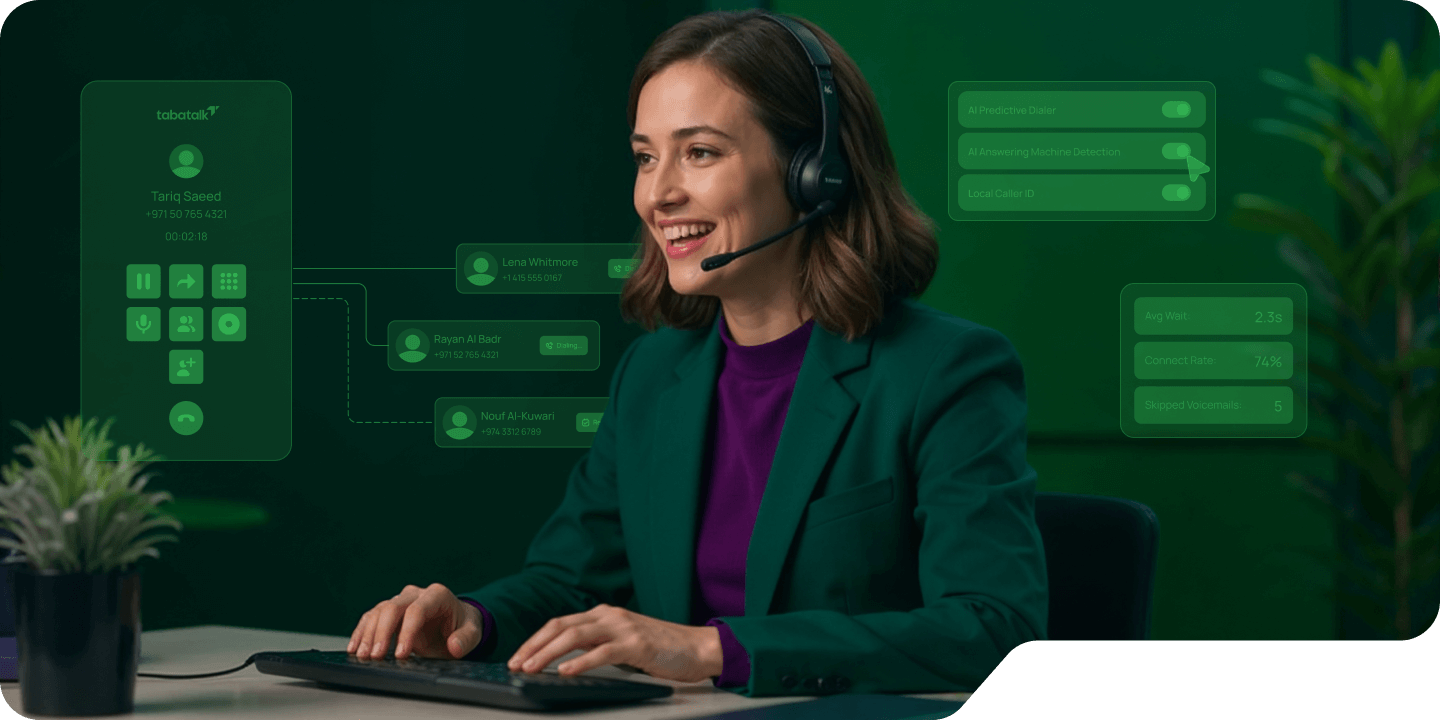







Too many calls go to voicemail.



How TabaTalk
AMD works?
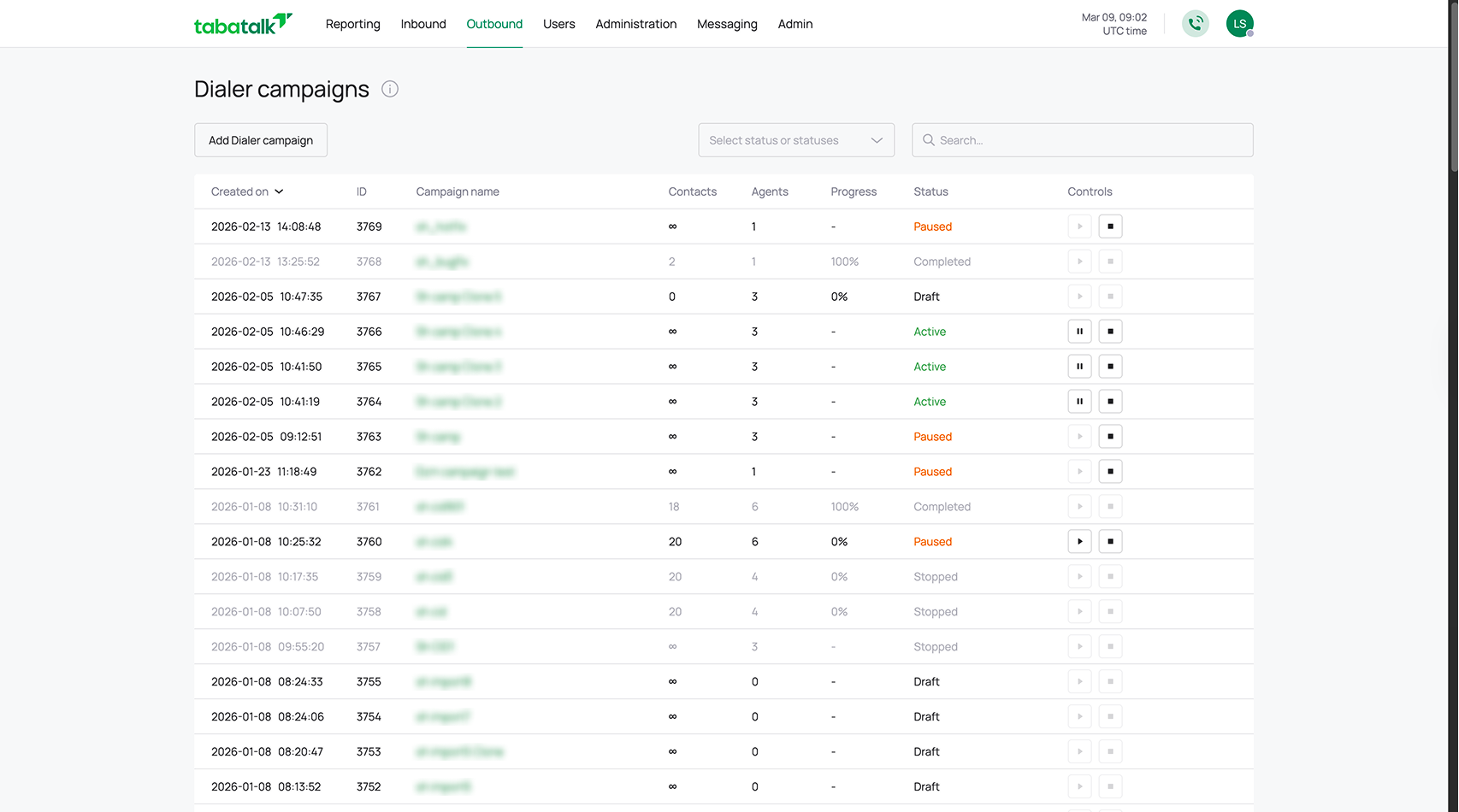
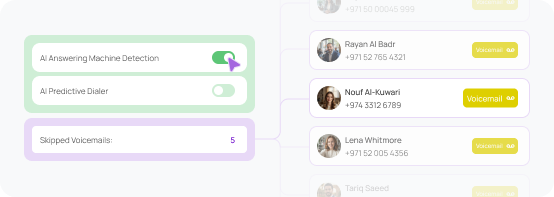
Calls connect through your outbound workflow, initiating detection immediately without slowing down dialing speed.
TabaTalk analyzes early audio patterns to detect greetings, pauses, and signals typical of voicemail systems.

The system quickly classifies calls as live answers or machine responses using real-time detection logic.
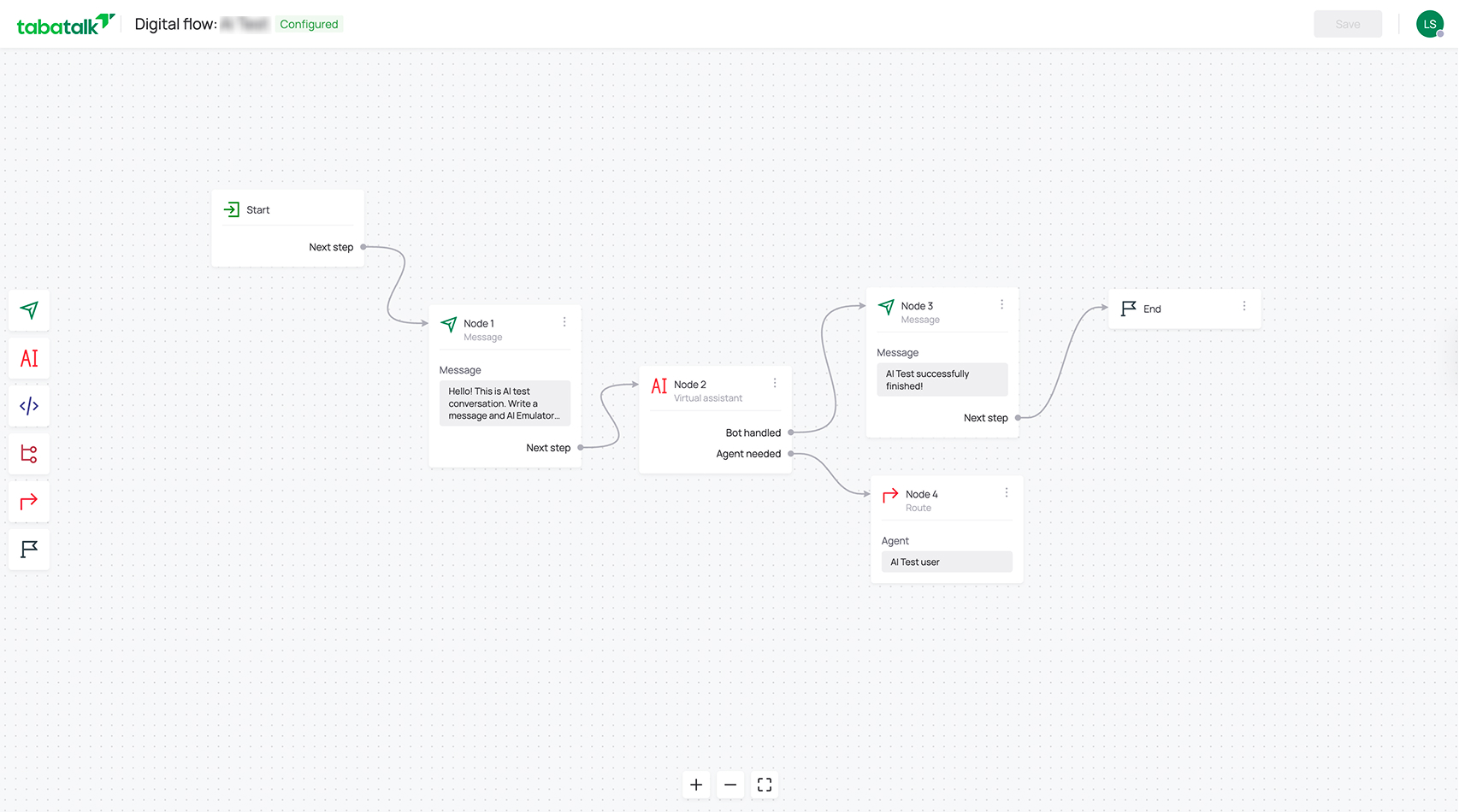
Calls are routed based on your workflow, helping agents skip voicemails and focus on live conversations.
outbound performance.
Fits into your
outbound calling workflow.
More ways TabaTalk
helps you deliver.
Every channnel,
one workspace.
Build journeys
that work.
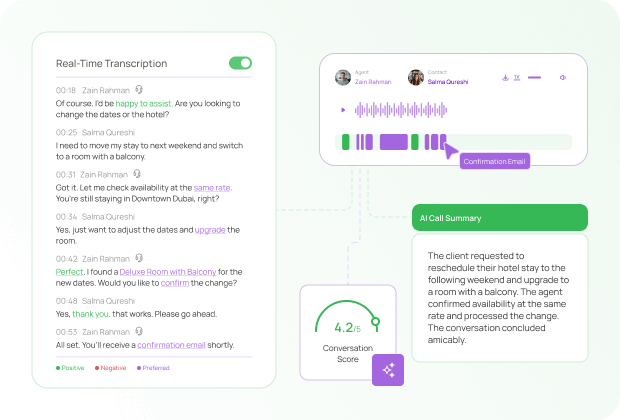
Understand what’s really said.
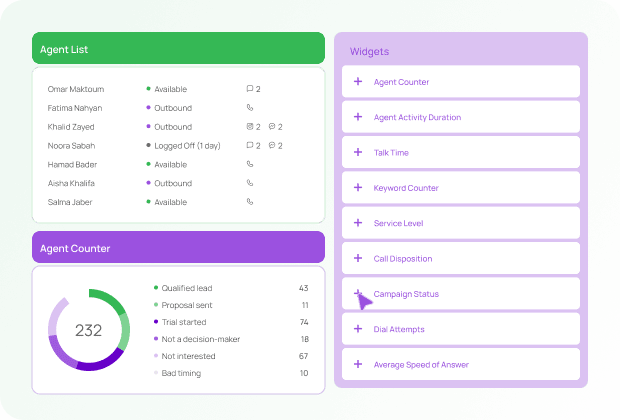
See what matters, when it matters.
Ready
when you are.


wondering
What is answering machine detection software?
Answering machine detection software, often called AMD, instantly identifies whether a call is picked up by a human or an answering machine. It filters out voicemail and non-live calls before they ever reach an agent, so outbound teams spend their time on real conversations instead of dead ends.
For call centers running high-volume campaigns, this kind of automation makes a noticeable difference in how many live contacts agents actually reach per shift. It is one of those tools that sounds simple on paper, but the impact on daily throughput and agent morale tends to be pretty immediate once it is in place.
How does AI answering machine detection work?
AI-driven AMD analyzes audio patterns the moment a call connects. It listens for pauses, tone shifts, and speech structure typical of answering machines, then classifies the response as a live person or a voicemail. This voicemail detection happens in real time, so there is no awkward delay before the agent is either connected or the call is routed elsewhere in the workflow.
What makes it different from older rule-based methods is the ability to adapt. The system picks up on subtle variations in greetings and beep patterns that simpler logic would miss, which keeps classification reliable across different call lists.
How accurate is TabaTalk’s answering machine detection?
TabaTalk's AMD is built to deliver reliable, real-time machine detection that supports high-volume outbound workflows. Accuracy depends on factors like call quality, network latency, and how answering machines are configured on the receiving end.
That said, the system balances speed with precision, and most teams find it performs well enough to noticeably cut down wasted agent time. Calls where a greeting pattern or tone from answering machines is clear tend to be classified quickly and correctly. In trickier scenarios, perhaps a short voicemail greeting or background noise, results can vary, but the overall trend is strong.
How quickly can the software detect voicemail or machine-answered calls?
Detection kicks in within the first moments of a call. TabaTalk's AMD processes early audio signals almost immediately, so your workflow can respond without unnecessary delays.
For teams running predictive dialing, that speed matters quite a bit. It keeps call campaigns moving and reduces the gap between dialed calls and live conversations, which is perhaps the biggest factor in overall outbound efficiency. The goal is to make a classification before the agent even notices a pause. In most cases, the system reaches a decision fast enough that routing feels seamless from the agent's perspective.
Can I adjust detection sensitivity?
Yes. TabaTalk lets you adjust how aggressively the AMD classifies calls based on your campaign goals. If reaching every possible live person is the priority, you can loosen sensitivity so fewer calls get flagged as machines. If reducing false positives on machine-answered calls matters more, tighten it. This flexibility is especially useful when implementing AMD across different call lists or markets, where answering machine patterns can vary quite a bit.
Some teams prefer a cautious approach; others want speed above all else. Either way, the settings give you room to match the system to your actual workflow.
Does it work with predictive dialing workflows?
It does. TabaTalk's machine detection works alongside predictive and automated dialing without slowing performance. The AMD runs in the background, classifying calls as they connect, and agents only get routed to live answers. It keeps your dialer at full pace while the system handles the human detection side quietly.
For high-volume teams, that kind of parallel processing is what keeps throughput consistent throughout the day. You do not have to choose between dialing speed and detection quality; both run at the same time, which is how it should work in any serious outbound operation.
Can it support multilingual outbound environments?
Yes. TabaTalk handles diverse calling environments, including multilingual markets across the GCC, Europe, and beyond. The AMD analyzes audio patterns rather than relying on language-specific models, so it works whether calls are in Arabic, English, French, or another language entirely.
This makes it practical for contact center teams operating across multiple regions without needing separate configurations for each market. It is worth noting that the system focuses on acoustic signals, not word recognition, so a shift in language does not throw off the detection logic the way it might with speech-to-text approaches.
Is it suitable for GCC and MENA contact centers?
Absolutely. TabaTalk is designed with regional needs in mind, including call center teams across the GCC and MENA. The platform supports SIP-based telephony and cloud infrastructure, so it fits into the kind of setups common in these markets.
Whether your team handles sales, collections, or support calls, the AMD adapts to local workflows and communication patterns found across the region. Connectivity and latency considerations are already accounted for, which means you are not bolting on a tool that was only tested in Western markets and hoping for the best.
How does it help reduce wasted agent time?
By identifying voicemail early, TabaTalk's AMD filters out non-live calls before they reach an agent. That means less time spent listening to greetings or waiting through beep machine tones, and more time focused on productive conversations.
Overall contact rates tend to go up as a result. It is a small change in the workflow, but most teams notice the difference within the first few days of use. When agents are not constantly cycling through unanswered or machine-picked calls, their energy stays higher and their conversion numbers usually follow.
Can TabaTalk integrate with our broader contact center workflow?
Yes. TabaTalk connects with CRMs and contact center software through its AMD API, keeping call data, notes, and actions aligned across your outbound process. Whether you use Salesforce, HubSpot, or other AMD platforms and tools, the integration keeps everything connected from dialing through to reporting.
It is built to fit within your existing stack rather than replace it, which makes adoption faster for most teams. The idea is that your agents, managers, and reporting dashboards all stay in sync without manual workarounds or extra steps between systems slowing things down.