


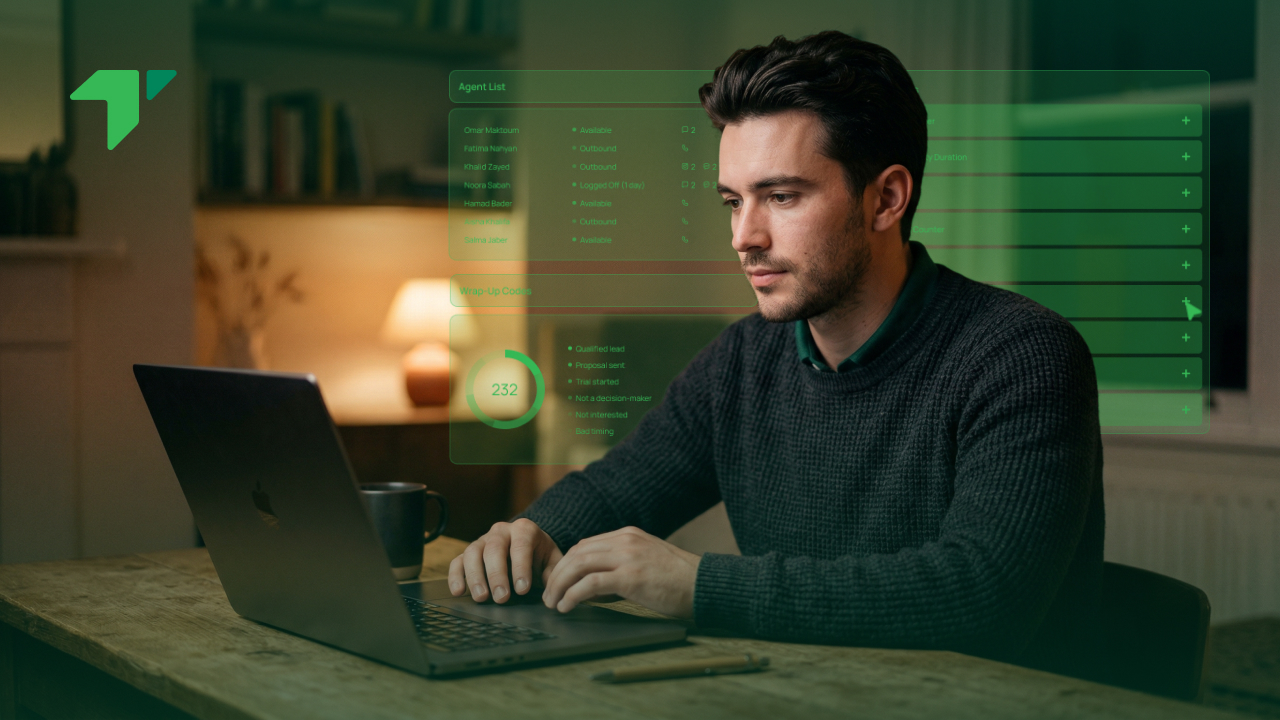
Remote workforce management is the practice of overseeing, scheduling, monitoring, and developing employees who work outside a traditional office environment, using cloud-based tools, structured processes, and clearly defined performance frameworks to replace the visibility that physical proximity once provided.
Organizations that struggle with this discipline tend to experience predictable symptoms: lower productivity, communication breakdowns, inconsistent performance across distributed teams, higher turnover among employees who feel unsupported, and heightened compliance risk. The root cause is rarely remote work itself. Problems typically emerge when managers apply office-based habits to a distributed environment without recognizing that those habits depended on physical presence to function.
This guide explains how remote workforce management works in practice, the specific challenges organizations face when making the transition, the tools required to build a functional system, and the strategies that help leaders run distributed teams effectively at scale.
What Is Remote Workforce Management?
Remote workforce management is the discipline of leading, scheduling, monitoring, and developing employees who work outside a shared office, whether they operate in fully distributed teams, hybrid arrangements, or field-based roles.
Traditional office management relies heavily on ambient visibility. Managers can see who is present, who appears to be struggling, where a project stands, and which conversations need to happen. That awareness builds naturally through proximity and requires very little deliberate effort to maintain.
Remote environments remove that visibility entirely. A manager working with a distributed team knows only what communication systems and reporting tools surface. Everything else is invisible by default.
Replacing that ambient awareness requires a different operating model, one built on remote workforce management software, documented processes, structured communication cadences, outcome-based performance frameworks, and workforce analytics that translate distributed activity into something supervisors can actually act on.
What Remote Workforce Management Replaces
In a traditional office environment, managers depend on floor supervision, informal check-ins during the day, physical scheduling boards, paper or spreadsheet timesheets, and in-person collaboration as the default mode of working through problems together. None of those mechanisms translate directly to a remote context. Each requires a deliberate digital equivalent built into the operational infrastructure.
Who Needs Remote Workforce Management?
The discipline applies broadly across contact centers managing agents who work from home, sales organizations running distributed SDR and BDR teams, customer support functions spread across multiple time zones, field service businesses coordinating technicians in the field, and hybrid workplaces where some employees are on-site and others are not.
The Most Important Management Shift
Every other strategic and tactical decision in remote workforce management builds from a single foundational change: moving from activity management to outcome management.
Instead of asking whether people are at their desks, leaders ask whether people are achieving the expected results. That reorientation shapes how performance gets defined, how schedules get built, how coaching conversations are structured, and how technology gets selected and configured. Organizations that do not make that shift tend to default toward surveillance, which creates its own set of problems discussed below.
Remote Workforce Management Challenges: What Makes It Hard
Managing employees across distributed locations presents challenges that simply do not exist in the same form within a physical office. Understanding them clearly is a prerequisite for designing systems that address them.
Visibility Without Physical Presence
In an office, managers develop a continuous, low-effort awareness of what is happening around them. They notice when someone looks overwhelmed, when a desk has been empty for an unusual stretch, or when a conversation between two colleagues looks like it needs to be redirected. That awareness builds without any deliberate system; it is a byproduct of shared space.
Remote work removes that byproduct entirely. Managers learn only what reporting tools, check-in calls, and messaging platforms reveal. Information that would surface automatically in an office requires active collection in a distributed environment.
The solution is not to approximate physical surveillance digitally but to build structured digital visibility. Real-time dashboards, regular reporting cadences, scheduled check-ins, and workforce analytics create a data-based picture of what is happening across the team. That picture is different in nature from physical observation, but it can be more consistent, more objective, and more actionable when designed well.
Communication Gaps and Coordination Costs
Remote teams spend more effort coordinating work than co-located ones do. A question that would take thirty seconds to resolve face-to-face becomes a message that waits for a response, a notification that gets missed, or a meeting that needs to be scheduled. Multiply that friction across dozens of daily interactions and the cumulative cost becomes significant.
The async versus synchronous tension sits at the center of this challenge. Some organizations over-rely on meetings, filling schedules with video calls that could have been a written update. Others under-communicate entirely, leaving distributed employees uncertain about priorities and decisions. Both create friction, though in different ways.
The solution is defining explicit communication protocols rather than leaving individual teams to develop their own conventions. Teams should agree on what belongs in a messaging channel like Slack, what warrants an email, what requires a meeting, and what needs to be captured in a document for future reference. Consistency in those conventions reduces coordination costs and limits the confusion that develops when different team members operate on different assumptions.
Performance Monitoring Without Micromanagement
Reduced visibility is uncomfortable for many managers, and a common reaction is to compensate by increasing surveillance. Keystroke tracking, screenshot monitoring, and constant status update requests are among the most frequent manifestations of this instinct.
The problem is that this approach tends to be counterproductive. High performers consistently value autonomy; removing it signals distrust, reduces engagement, and accelerates turnover among the employees the organization most needs to retain. Monitoring that focuses on activity rather than output also provides little actionable information. Knowing that an agent was logged into a system for seven hours does not tell a manager whether any meaningful work occurred during that time.
A more effective alternative is monitoring outcomes directly. Calls completed, tickets resolved, revenue generated, and projects delivered are all measurable, meaningful, and tied directly to business results. Managers who focus on those metrics can identify performance issues accurately without creating the trust damage that constant surveillance produces.
Team Cohesion and Culture at a Distance
Remote employees often interact with colleagues only when a specific work task requires it. Without deliberate effort to build connection, distributed teams can become a collection of individuals who happen to share an employer rather than a cohesive group with shared norms and mutual support.
Isolation develops gradually and is easy to miss until its effects on retention and collaboration become visible. New hires are particularly vulnerable. An employee starting a role in a physical office absorbs culture through observation, informal conversations, and casual exposure to how experienced colleagues behave. A remote new hire has none of those passive channels. Without a structured onboarding experience that builds connection intentionally, ramp-up times increase and early attrition rises.
Organizations that manage distributed culture well treat connection as an operational responsibility rather than an optional social activity. Scheduled team standups, recognition programs, organized social channels, and peer mentorship arrangements all contribute to the kind of cohesion that reduces isolation and supports long-term retention.
Security and Compliance Risk
Employees working remotely access systems from home networks, shared environments, and sometimes personal devices, each of which introduces security exposure that a managed office network does not. Regulations including GDPR, HIPAA, and PCI DSS apply regardless of where an employee physically sits when handling protected data.
Addressing this requires enforcing security controls at the software and policy layers rather than relying on employees to self-manage. Multi-factor authentication, single sign-on, endpoint device management, and zero-trust access controls are foundational requirements rather than optional additions. Security training should be ongoing, not a one-time onboarding module.
Remote work should never produce a lower compliance standard than the one that applied in the office. In many cases, organizations that build security infrastructure deliberately for a distributed workforce end up with stronger controls than they had when everyone shared a single physical location.
Core Components of a Remote Workforce Management System
Every effective remote workforce management operation depends on five interconnected areas. Weakness in any one of them degrades the others.
1. Scheduling and Workforce Planning
Scheduling becomes considerably more complex when employees work across multiple locations, time zones, and personal circumstances. Managers cannot look across a room to assess who is available, who is stretched, or where coverage gaps are developing.
Key responsibilities include shift planning, capacity forecasting across expected demand fluctuations, leave management that accounts for varying local regulations, and adherence monitoring that tracks whether agents and employees are available when their schedules require it.
Workforce management platforms built for this purpose include Assembled, NICE Workforce Management, Verint, Calabrio, and Playvox. For contact center operations specifically, platforms like TabaTalk embed scheduling and adherence functionality directly into the broader call center environment, reducing the overhead of managing separate systems.
The desired outcome is straightforward: every employee understands their schedule clearly, and every supervisor has accurate, real-time visibility into staffing levels and workload distribution without needing to chase information manually.
2. Performance Monitoring and KPI Tracking
Performance management in a remote context should center on measurable outputs. Calls completed, deals closed, tickets resolved, and projects delivered are the kinds of metrics that align directly with business objectives and allow managers to identify both high performance and underperformance accurately.
Output-based metrics outperform activity-based ones for a consistent reason: activity metrics measure inputs, which may or may not translate to results. A salesperson who sends two hundred emails a week but closes nothing is performing poorly by any meaningful measure, regardless of what activity monitoring shows. Tracking keyboard strokes, login times, or browser activity rarely improves business results; tracking revenue generated or customer issues resolved does.
Platforms most organizations rely on for performance visibility include Salesforce dashboards, HubSpot reporting, Jira analytics, and Asana project tracking, depending on the nature of the work being measured.
Every employee should have a clear performance scorecard tied to role-specific objectives. That scorecard serves as the foundation for every coaching conversation, performance review, and development plan.
3. Communication and Collaboration Infrastructure
Distributed teams depend on communication infrastructure to a degree that co-located teams do not. When the office disappears as a shared context, everything that relied on it, from spontaneous problem-solving to casual knowledge transfer, needs to find a digital home.
A functional communication stack typically combines synchronous tools for real-time interaction (Zoom, Microsoft Teams, Google Meet), asynchronous tools for non-urgent communication (Slack, Teams chat, email), and documentation tools for capturing decisions, processes, and institutional knowledge (Notion, Confluence, Google Workspace).
The stack matters less than the protocols governing when each channel is appropriate. Without documented standards, teams default to either too many meetings or communication voids. Both reduce productivity. Establishing clear norms around what each channel is for, and ensuring those norms are enforced consistently, removes the daily friction of employees deciding how to communicate on an ad hoc basis.
4. Time Tracking and Productivity Monitoring
Time tracking helps organizations understand where effort is going, how resources are allocated across projects, and whether workloads are distributed appropriately. Effective approaches include active time logging, project tagging by category or client, and work allocation tracking that surfaces imbalances before they become problems.
The important distinction is between transparent time tracking and covert surveillance. Employees generally accept time tracking when they understand its purpose and see it applied consistently. They tend to resist strongly when monitoring feels hidden, punitive, or disproportionate. Transparency in how and why time data is collected improves adoption rates and maintains the trust that distributed management depends on.
Commonly used tools include Toggl Track, Harvest, Clockify, and Hubstaff. For organizations managing contractors alongside employees, integrating time tracking with payroll systems reduces administrative overhead significantly.
5. Workforce Analytics and Reporting
Workforce analytics aggregate data across the organization and surface the patterns that individual dashboards and reports might miss. Senior leaders cannot rely on intuition in a distributed environment, where the volume and geographic spread of the workforce makes it impossible to develop the instinctive awareness that physical proximity provides. Data becomes the substitute.
Analytics platforms including Power BI, Tableau, Looker, Workday, and BambooHR give leaders visibility into productivity trends, capacity forecasts, training needs, and performance distribution across the team. The goal is actionable insight: not dashboards for their own sake, but information that enables better decisions about staffing, development investment, and operational adjustments.
Remote Workforce Management Strategies That Work
Shift From Presence Management to Outcome Management
Define measurable expectations for every role before attempting to monitor performance. Calls per hour, tickets resolved per day, revenue generated per quarter, and projects delivered on schedule are all clear, role-specific metrics that employees can understand and managers can track objectively.
Evaluating employees against results rather than visible activity removes the tension between autonomy and accountability. High performers know exactly what is expected and how their work is measured. Managers have a factual basis for coaching conversations rather than relying on subjective impressions of who seems busy.
Establish a Structured Communication Cadence
Consistency in communication reduces the uncertainty that often develops in distributed environments. When employees know when they will hear from their manager, when the team meets, and when performance will be reviewed, they spend less energy wondering about those things.
A cadence that works for most remote teams includes daily asynchronous updates covering priorities, progress, and blockers; weekly team meetings focused on performance and upcoming priorities; weekly one-on-one sessions where managers review KPIs, discuss challenges, and address development opportunities individually; monthly retrospectives to identify process improvements; and quarterly performance reviews paired with formal goal setting.
The specific formats matter less than the consistency. Teams that know the cadence exists and rely on it are more settled and more productive than ones where communication timing is unpredictable.
Build Visibility Through Digital Dashboards
Managers should access performance information without repeatedly requesting it from employees. Asking for status updates multiple times a day is a form of management friction that erodes trust and consumes time on both sides. Dashboards that surface the relevant data automatically replace that friction with self-serve visibility.
For contact center operations, platforms such as TabaTalk provide agent availability status, live call monitoring, queue depth, and performance metrics in a single view. This recreates the situational awareness that a physical contact center floor provides, without requiring the supervisor to be present in the same room.
For project-based teams, platforms like Asana, Jira, or Monday.com surface task progress, workload distribution, and risk flags without additional meetings. Managers can identify where help is needed and where capacity exists through the platform rather than through a conversation.
Standardize Remote Onboarding
Remote onboarding should follow a documented process that every new hire experiences consistently, regardless of who their manager is or which team they join. Variation in onboarding quality is one of the most common contributors to early attrition in distributed organizations.
A structured onboarding sequence typically covers system access and tool configuration on day one, along with a basic orientation to team norms and communication protocols. Days two through five include structured training, call or task shadowing with an experienced colleague, and guided practice under supervision. Week two moves to supervised independent work. Week three and beyond transitions toward full independence with continued check-ins.
Assigning a peer buddy or mentor to each new hire accelerates integration meaningfully. Experienced colleagues who are available to answer the informal questions that documentation cannot fully anticipate help new hires navigate the first few months faster and with less frustration.
Manage Remote Teams Across Time Zones
Time zone distribution creates both opportunity and coordination challenge. A team spread across multiple zones can provide coverage across a longer window than a co-located team, but scheduling and communication require more deliberate management.
Establishing core overlap hours, typically a two to four hour window when all team members are expected to be available simultaneously, creates a reliable collaboration window without requiring everyone to work the same full schedule. Outside those hours, communication should be structured as asynchronous by default, with the expectation that responses will come within a defined window rather than immediately.
Rotating meeting times across the quarter is a fairness practice that matters more than it might appear. If the same employees always attend meetings at inconvenient hours due to their time zone, that recurring inconvenience becomes a source of attrition. Sharing the scheduling burden more equitably signals that all team members’ circumstances are taken seriously.
Support Remote Employee Wellbeing
Burnout develops gradually in distributed environments and is often invisible until it produces measurable performance decline or resignation. Remote employees frequently work longer hours than their office-based counterparts, partly because the commute that used to create a natural boundary between work and home no longer exists. Taking fewer breaks, skipping time off, and struggling to mentally disconnect at the end of the day are all common patterns.
Managers should watch for early warning signs: declining output that cannot be explained by workload, changes in communication frequency or tone, rising error rates, or withdrawal from team interaction. These signals often precede more visible problems by weeks.
Protective practices include respecting contracted working hours rather than rewarding constant availability, protecting break times in scheduling systems, actively encouraging employees to take their allocated leave, and modeling healthy behavior at the management level. If leaders visibly overwork, employees read that as the real expectation regardless of what the policy documents say.
Remote Workforce Management Software: Key Tools by Category
Workforce Management and Scheduling
Effective scheduling platforms for distributed teams provide automated schedule generation, real-time adherence monitoring, leave management with appropriate approvals and visibility, and demand forecasting that accounts for seasonal and campaign-based volume variation. Leading tools include Assembled, Calabrio, Verint, NICE Workforce Management, and Playvox.
For contact center environments, TabaTalk integrates workforce management capabilities directly into the call center operating environment, reducing the need for separate tools and improving the visibility supervisors have into agent availability and performance together.
Time Tracking and Productivity Monitoring
Time tracking tools should prioritize active logging over passive monitoring. The goal is understanding resource allocation and project effort, not verifying that employees are sitting at a computer. Payroll integration and project-level tagging are valuable features for organizations managing contractors alongside direct employees. Commonly used platforms include Toggl Track, Harvest, Clockify, and Hubstaff.
Performance Management and Analytics
Performance management platforms support KPI tracking, goal management, structured review workflows, and ongoing feedback cycles. Organizations running formal performance frameworks commonly use Lattice, Culture Amp, 15Five, BambooHR, or Workday, depending on the scale and maturity of their HR infrastructure.
Communication and Collaboration
Most distributed teams combine Slack or Microsoft Teams for day-to-day communication, Zoom or Google Meet for synchronous meetings, and a documentation platform such as Notion or Confluence for institutional knowledge. The specific tools matter less than the protocols governing how they are used.
Mobile Workforce Management Applications
Field-based teams require mobile solutions that support scheduling, task assignment, communication, and location tracking from a smartphone or tablet. Connecteam, Samsara, and similar mobile workforce management platforms provide scheduling, communication, and visibility for employees who do not work from a fixed location.
Security and Remote Access
Security infrastructure for a distributed workforce typically includes identity and access management through Okta, endpoint management through Microsoft Intune or Jamf, and secure network access through Cloudflare Access or Zscaler. Security belongs within the workforce management strategy rather than being treated as a separate IT concern that operates independently of operational decisions.
Remote Workforce Management for Contact Centers
Contact centers represent one of the most mature applications of distributed workforce management. Performance in this environment is highly measurable by nature: calls per hour, customer satisfaction scores, average handle time, first-call resolution rates, and conversion performance all provide clear, quantifiable signals about how agents are performing.
Digital Floor Management
Modern contact center platforms replace physical floor supervision with real-time digital visibility. Supervisors access live dashboards showing agent availability, current call status across the team, queue depth by routing group, and performance metrics that update continuously throughout the shift. That visibility gives supervisors the situational awareness to intervene early, redistribute capacity, and coach agents without needing to be physically present.
Call Monitoring Tools
Silent monitoring, whisper coaching, and barge-in functionality allow supervisors to support agents during live calls regardless of location. A supervisor sitting in a different city can guide an agent through a difficult interaction just as effectively as one standing beside the agent’s desk, provided the platform makes that capability straightforward to use in real time.
Scheduling Remote Agents Across Time Zones
Contact center scheduling for a distributed workforce requires balancing call volume forecasts with agent skill profiles, local employment regulations, and time zone coverage requirements. Integrated workforce management tools that account for all those variables simultaneously produce better schedules with less manual intervention than spreadsheet-based approaches.
AI-Assisted Quality Management
Manual call quality review is time-consuming and inherently limited in scope. An evaluator reviewing calls one by one can assess a small fraction of the total volume a contact center produces. AI-powered quality management platforms can evaluate interactions at scale, surface patterns across thousands of calls, and identify coaching opportunities that manual review would miss. For growing operations, this approach provides broader visibility with less administrative overhead.
Compliance and Legal Considerations for Remote Workforces
Employment Law for Remote Workers
Remote employees retain the same legal protections as their office-based counterparts. Working hours regulations, mandatory break requirements, health and safety obligations, and employment law protections all apply regardless of where an employee physically works. Organizations that assume remote arrangements create regulatory flexibility tend to encounter problems when those assumptions are tested.
Right to Disconnect
Several countries have introduced or are actively developing legislation that protects employees from workplace contact outside contracted hours. Managers operating across multiple jurisdictions should understand where those obligations apply and configure communication expectations accordingly.
Cross-Border Employment Complexity
Employees working internationally, whether through deliberate international hiring or through employees who relocate without notifying the employer, can create unexpected tax obligations, employment law exposure, and compliance complexity. Professional legal and tax advice is typically required before formalizing cross-border employment arrangements.
Data Protection for Remote Workers
Employees handling customer or sensitive company data from home must follow secure practices that may be more rigorous than what a managed office environment required. Typical controls include managed devices, secure access protocols, encryption requirements, data handling training, and clear procedures for reporting potential breaches or security incidents promptly.
Monitoring and Employee Privacy
Monitoring practices must be both lawful and proportionate. Organizations should document what is monitored, the legitimate business reason for monitoring it, and how the information collected is used. Covert or excessive monitoring creates GDPR exposure in the EU and UK, and may raise employment law concerns in other jurisdictions. Transparency in monitoring practices protects the organization legally and supports the trust relationship with employees that makes distributed management function.
How to Scale Remote Workforce Management
Build Repeatable Processes Before Expanding
Growth amplifies whatever weaknesses exist in operational processes. An onboarding approach that works informally for a team of ten becomes chaotic at fifty. Communication norms that survive through shared context in a small group collapse when the team grows large enough that not everyone knows each other.
Document the core processes, including onboarding sequences, communication standards, performance scorecards, and escalation paths, before expanding headcount. The first iteration of each process becomes the template for scaling. Organizations that treat early processes as temporary workarounds tend to find themselves rebuilding them under pressure.
Move From Manual to Automated Workforce Management
Automation becomes more valuable as teams grow because it handles tasks that would otherwise consume increasing amounts of management time. Scheduling automation, demand forecasting, automated reporting cycles, and onboarding workflow tools all reduce the manual overhead that scales linearly with headcount. Investing in automation earlier than it seems strictly necessary creates capacity for growth without proportional increases in administrative burden.
Use Workforce Analytics as a Scaling Tool
Analytics capabilities that seemed optional at small scale become critical as organizations grow. Leaders need visibility into productivity trends across larger populations, capacity forecasts that span multiple teams and geographies, training needs surfaced by performance data rather than self-reporting, and performance distribution patterns that identify whether quality is maintaining pace with headcount growth.
Data-informed scaling decisions consistently outperform decisions made on instinct or anecdote when the operation has grown beyond what any individual can observe directly.
Frequently Asked Questions
What is the difference between remote workforce management and traditional workforce management?
Traditional workforce management assumes employees share a physical location where supervisors have direct, ongoing visibility into attendance, activity, and collaboration. Remote workforce management replaces that physical visibility with structured digital systems covering scheduling, performance monitoring, communication, analytics, and security across a distributed population.
What is a mobile workforce management application and when does a business need one?
A mobile workforce management application is software designed for employees who work outside fixed locations, such as field service technicians, drivers, or distributed staff without desk-based roles. These tools typically support scheduling, task assignment, communication, time tracking, and location visibility through a mobile device. Organizations need them when a meaningful portion of the workforce operates in the field rather than from a computer at a fixed location.
How do you manage productivity for remote employees without using surveillance software?
Define measurable outcomes for every role and track performance against those targets. Organizations should focus on completed work, customer satisfaction results, sales performance, project delivery, and service quality rather than monitoring keyboard activity or online presence indicators. Outcome-based management provides more meaningful data and avoids the trust damage that surveillance approaches tend to cause.
What KPIs should be used to measure remote employee performance?
KPIs should align with each role’s actual responsibilities. Common examples include calls handled, tickets resolved, customer satisfaction scores, revenue generated, projects delivered, deadlines met, and quality review scores. Outcome-focused measurements consistently provide more actionable insight than activity-based indicators.
How do you handle scheduling for remote teams working across multiple time zones?
Establish core overlap hours for collaboration while allowing schedule flexibility outside that window. Scheduling platforms that account for time zones, shift coverage requirements, local working hours regulations, and workload distribution help managers coordinate distributed teams without creating unnecessary friction or consistently disadvantaging employees in less convenient time zones.
What security controls are required for employees accessing customer data remotely?
Standard controls include multi-factor authentication, single sign-on, endpoint device management, encrypted network access, role-based permissions, and device encryption. Organizations should also provide ongoing training on data handling practices specific to remote environments and clear procedures for reporting security incidents.
Is employee monitoring software legal for remote workers in the EU and UK?
Legality depends on the specific practices and applicable local regulations. Organizations are generally required to disclose monitoring activities, demonstrate a legitimate business purpose, and ensure the monitoring is proportionate to that purpose. Covert monitoring or surveillance that goes beyond what is justified by the business need may create GDPR and employment law exposure.
How do you onboard remote employees effectively without an office environment?
Successful onboarding requires a structured sequence covering technology setup, documented training plans with clear milestones, supervised practice periods, regular check-ins with the manager, and peer mentorship to help new hires navigate informal questions. The process should be documented and consistent rather than varying by manager or team.
What is the right supervisor-to-agent ratio for managing remote contact center teams?
Many organizations target approximately one supervisor per ten outbound agents and one per fifteen inbound agents. Exceeding those ratios tends to reduce coaching quality and limit a manager’s ability to give meaningful support to each agent on the team.
How do you prevent burnout in a fully remote workforce?
Monitor workloads actively, encourage breaks, respect contracted working hours, support employees in taking their allocated leave, and watch for early warning signs including declining output, changes in communication patterns, or reduced engagement. Leaders should model sustainable working behavior rather than visibly overworking, because employees take behavioral cues from management regardless of what policy documents state.
Conclusion
Remote workforce management has moved from a niche operational concern to a core business capability for organizations of almost every type and size. Managing a distributed workforce successfully requires replacing office-based visibility with structured systems that provide scheduling, communication infrastructure, performance monitoring, workforce analytics, security controls, and employee development across a geographically dispersed team.
The organizations that do this well are not necessarily the ones with the most technology. They tend to be the ones that combine appropriate tools with clear processes, measurable expectations, consistent communication practices, and leadership that understands how to build accountability without surveillance.
Whether managing remote contact center agents, distributed sales teams, hybrid customer support operations, or fully remote knowledge workers, the underlying principles hold regardless of scale or industry. Center everything on outcomes. Build visibility through data rather than proximity. Support employees consistently through the structures and cadences that replace physical oversight. Scale through documented, repeatable processes that do not depend on individual judgment to execute correctly.
When those elements work in combination, remote workforce management stops being an operational challenge and becomes a meaningful competitive advantage.